


EPA Mid-Atlantic Administrator Highlights Energy, Water Infrastructure on Visit to Wyoming Valley, Pennsylvania
PHILADELPHIA – EPA Mid-Atlantic Administrator Amy Van Blarcom-Lackey completed a multi-day visit through the Wyoming Valley in Pennsylvania that included discussions and first-hand views of brownfield reclamation, landfill methane capture, wastewater infrastructure upgrades, and high production energy centers.
“Partnership collaboration is how we deliver environmental progress,” said Van Blarcom-Lackey, a Pennsylvania native who’s held the position since April 2025. “It’s critical that we learn from local leaders and agency partners to identify where EPA’s tools and technical support can help accelerate results. These visits underscored that collaboration with communities, utilities, and industry is essential to protect human health, steward natural resources, and grow local economies.”
Trip highlights
Earth Conservancy (Ashley, PA) — Van Blarcom-Lackey met with Earth Conservancy (EC), an experienced Pennsylvania Brownfields partner to discuss restoration projects, including the Nanticoke Creek Watershed Restoration Project, and other strategies to address legacy coal mining impacts in Luzerne County. The Nanticoke project was partially funded through a $1,956,427 EPA Brownfields cleanup grant that supports work to restore roughly 15,000 linear feet of stream, reconnect upper and lower watersheds, and prevent acid mine drainage from re-entering the creek—aiming to revive aquatic habitat, improve water quality, and create long-term environmental, recreational, and community benefits.
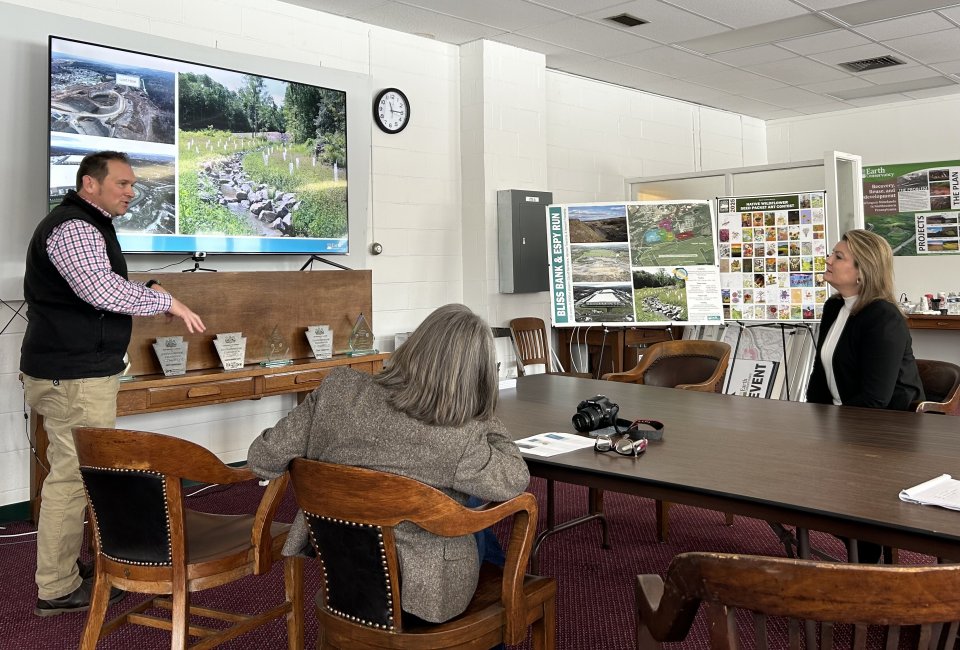
"We’re grateful for the opportunity to reflect on our shared history during this visit,” said Terry Ostrowski, Earth Conservancy President and CEO. “For more than three decades, EPA’s partnership has allowed us to reclaim land, reduce environmental risk, and return formerly blighted properties to productive use, strengthening both the environmental and economic health of our communities."
Archaea Energy (Throop, PA) – EPA met with Archaea Energy—a BP subsidiary and the nation’s largest renewable natural gas (RNG) producer—at its Assai facility. Discussions focused on how the industry is cutting waste emissions by capturing methane from landfills and farms and converting it into low‑carbon fuel and electricity. The team also discussed its other Pennsylvania RNG plants in Bethlehem and Hegins, which, like Assai, are designed to significantly reduce emissions and generate high‑value environmental credits.
-
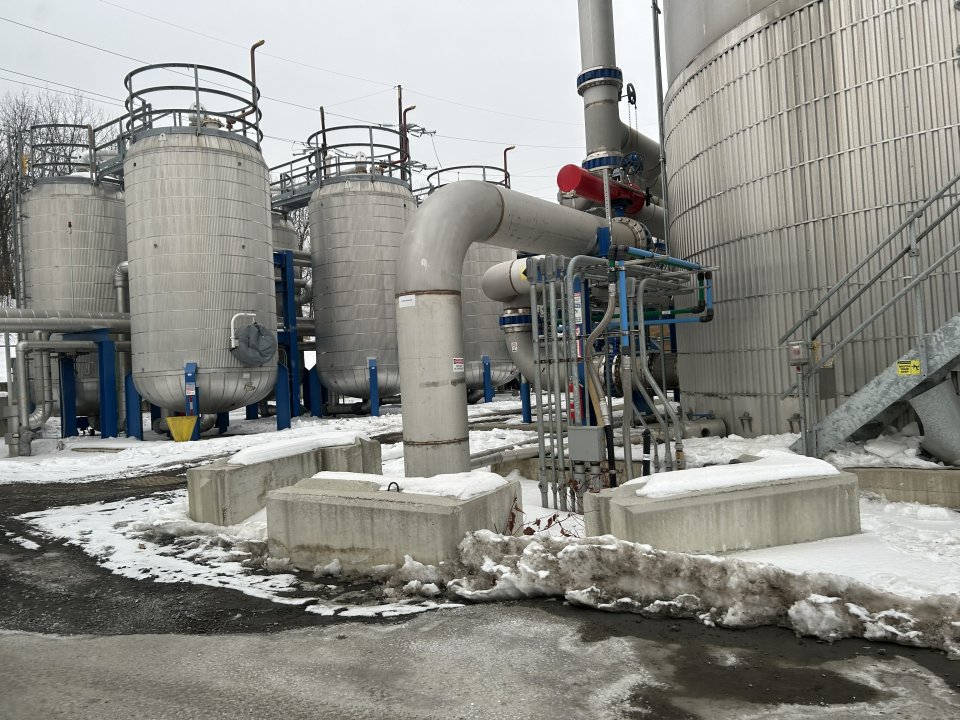
Archaea Energy's Assai Facility in Throop, Pennsylvania.
Lackawanna River Basin Sewer Authority (Throop, PA) - EPA’s visit continued with a roundtable discussion with LRBSA officials. The authority manages wastewater treatment across the watershed and works to reduce pollution from mine drainage, manage stormwater to improve water quality, and ensure the responsible discharge of treated effluent to the Lackawanna River. Operating under state and federal oversight, LRBSA works to advance per- and polyfluoroalkyl substances (PFAS) monitoring in collaboration with stakeholders and partners.
American Water’s Scranton Wastewater Treatment Plant (Scranton, PA) — EPA toured Pennsylvania American Water’s Scranton wastewater treatment plant (WWTP) which serves roughly 30,000 customers and has undertaken substantial upgrades under a 2013 EPA consent decree and Long-Term Control Plan to reduce combined sewer overflows (CSOs) to the Lackawanna River. The visit focused on recent investments, operational improvements, and strategies to manage stormwater and sanitary sewer overflows (SSOs). Discussions included different approaches to reduce system burden and improve water quality.
-
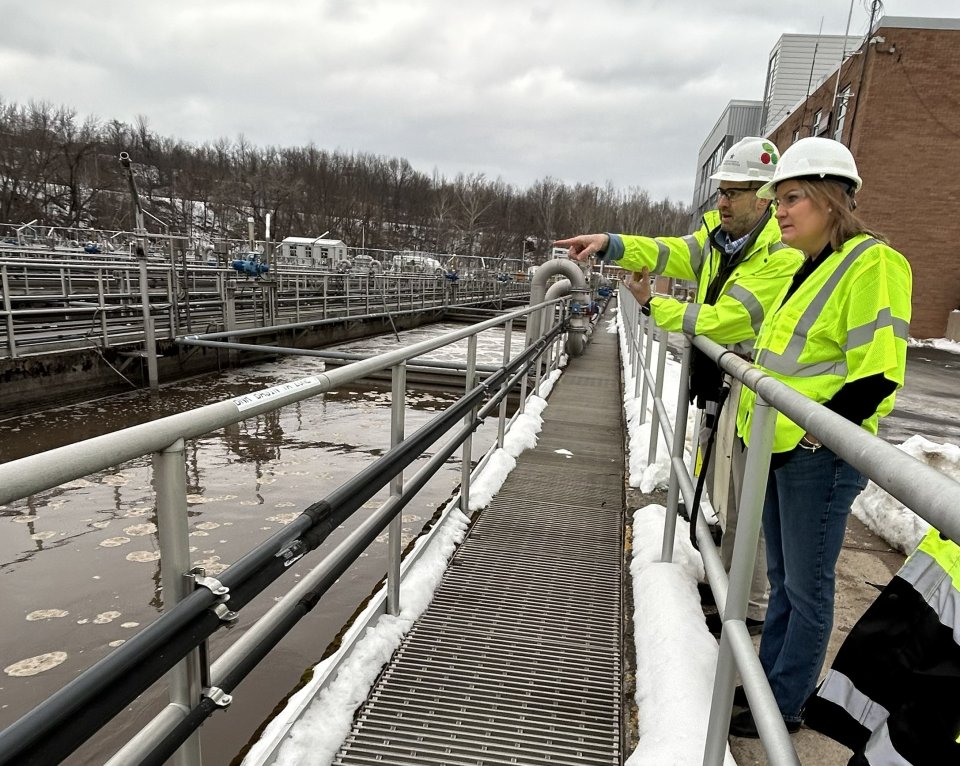
Daniel Rickard, Director of Engineering for PA American Water, leads a tour of the Scranton Wastewater Plant for EPA Region 3 Administrator, Amy Van Blarcom-Lackey.
“We’re proud to host our partners from the EPA and showcase our collaborative efforts to restore the Lackawanna River and the Chesapeake Bay,” said Daniel Rickard, Director of Engineering for PA American Water. “We truly value these partnerships, which play a vital role in protecting and preserving a clean environment.”
Invenergy - Lackawanna Energy Center (Jessup, PA) — EPA’s visits concluded at Invenergy’s Lackawanna Energy Center, the company’s largest operational project, which is a 1,485 megawatt (MW) combined-cycle natural gas facility that entered service in January 2019. Since the start of construction, Lackawanna has invested more than $285 million in the local economy, including $170 million in wages and benefits for workers and partner contributions totaling $400,000 to local nonprofits in Jessup and surrounding communities. Conversations highlighted the role of modern, efficient generation and energy storage in supporting grid reliability while advancing a broader transition to additional energy portfolios.
-
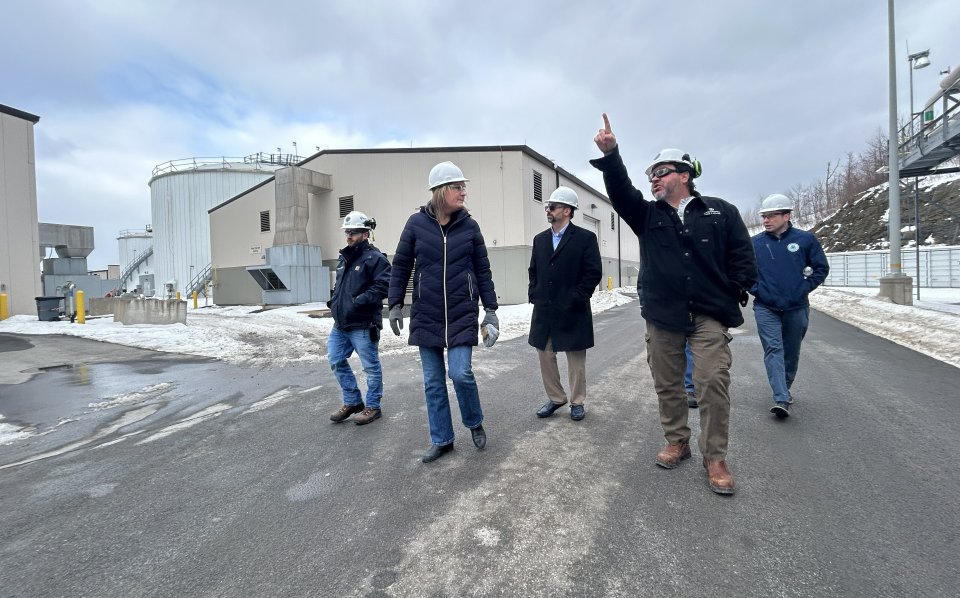
Invenergy Plant Manager Dane Devanney leads EPA personnel on a tour of the Lackawanna Energy Center in Jessup, Pennsylvania.
“With each visit, we saw the value of practical, effective solutions shaped by local expertise,” Van Blarcom-Lackey added. “From cutting methane emissions to strengthening water and energy infrastructure, we’re committed to partnering with communities and industry to deliver measurable environmental and economic benefits.”
EPA partners with communities, states, and industry to deliver practical, science-based solutions that protect human health, restore natural resources, and foster economic growth. To learn more about EPA activity throughout the Mid-Atlantic, visit our regional website or follow us on Instagram, X, and Facebook.