


Accessing Spanish Pesticide Labels
Para instrucciones en español, presione [enlace disponible próximamente].
- How do you find labels with Spanish sections?
- Where can farmworkers find the registration number or product name for a pesticide?
- What information is on a pesticide label?
- Other Spanish resources on pesticides
How do you find labels with Spanish sections?
If you have access to the product container, there may be Spanish text on it.
If not, there will be a web link or QR code leading to the Spanish text. In that case, follow the link or scan the QR code to access translated parts of the label.
If you do not have access to the product container, follow these instructions:
- Labels with Spanish sections will be added to the Pesticide Product and Label System (PPLS) website.
Go to the PPLS website. The home page looks like this:
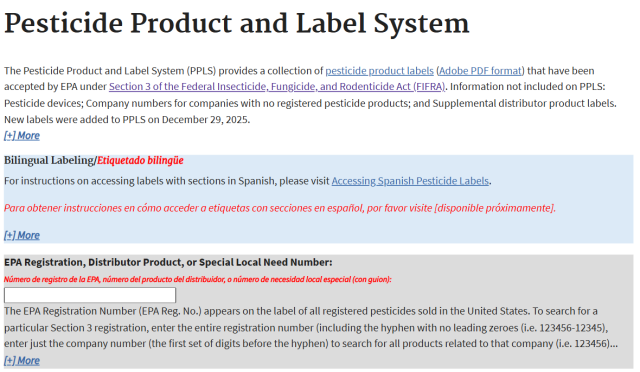
- Scroll down to the search bars.
Search by the EPA Registration Number or the Product Name. Agricultural workers can find that information at a central location on the farm, as described in the next section.
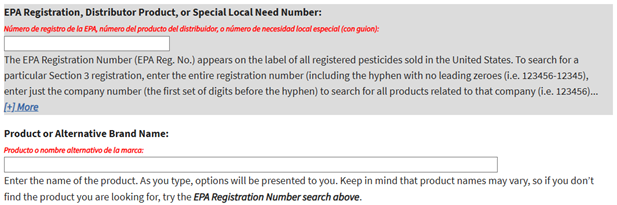
- Enter the registration number in the first search bar or enter the product name in the second search bar.
- Hit enter.
A page will open that shows information about the product. Make sure that the product name or registration number on the page match the product you’re looking for.
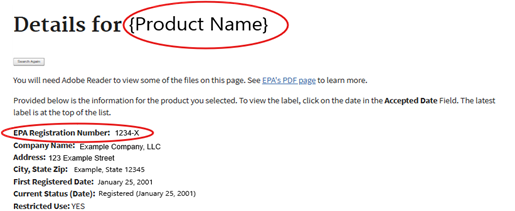
Click on the tab that says “Español/Spanish.”

- If the product has a label with sections in Spanish that has been submitted to EPA, you will see a URL link.
- Copy and paste the URL link into your browser to see the label with sections in Spanish.
Not all pesticides in PPLS have a label with Spanish sections yet. Not all labels with Spanish sections have been submitted to EPA. More will be added to PPLS as they become available.
Registrants are not required to translate the whole label - only sections. Learn more at EPA's Bilingual Labeling page.
Where can farmworkers find the registration number or product name for a pesticide?
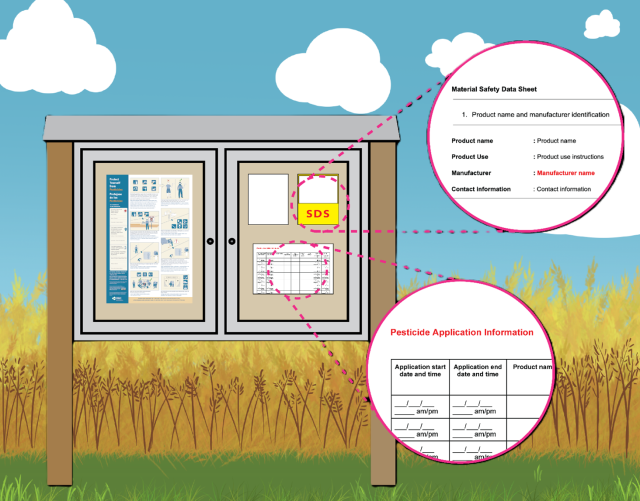
Employers at farms, forests, greenhouses, and nurseries must post information about the pesticides they use.
The information must be displayed at a central location on the farm.
For each product, employers must post:
The EPA Registration Number and Product Name and active ingredient(s).
A “Safety Data Sheet,” which contains the manufacturer’s name, specific information on the product, and important safety measures.
Employers must also tell workers and pesticide handlers where the central location is and allow them to access the information freely.
All of this is legally required under the Agricultural Worker Protection Standard (40 CFR 170).
This is an example of what a central location might look like:
What information is on a pesticide label?
Labels contain sections explaining many different things about a pesticide. Below is an example of what a label may look like:
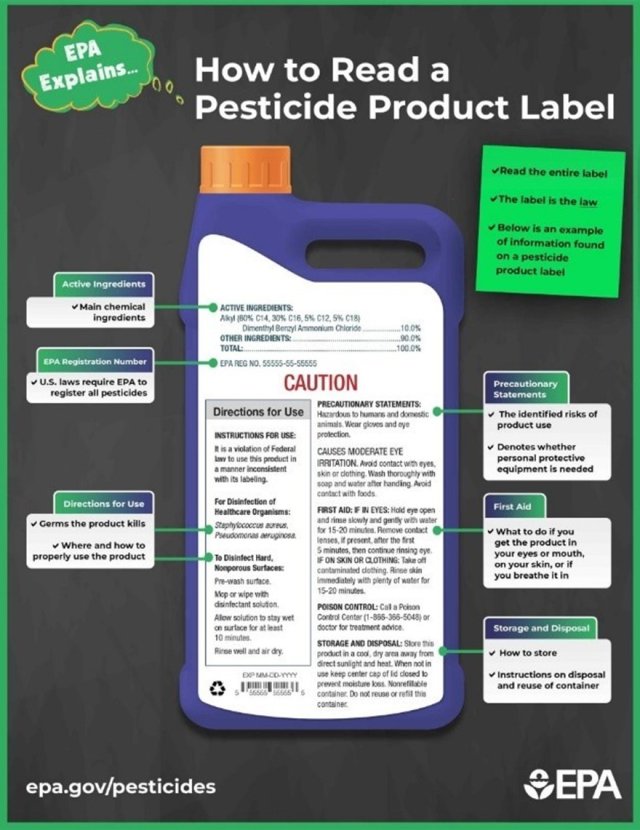
This label contains information about the pesticide’s ingredients, the risks of using the product and whether PPE is needed to use the product. It also contains first aid information.
Not all sections of labels are translated. However, much important health and safety information is.