


PFAS in Private Wells
What are PFAS?
Per- and polyfluoroalkyl substances (PFAS) are manufactured chemicals that have been used in industry and consumer products since the 1940s. Because of their widespread use and their persistence in the environment, many PFAS are found in the blood of people and animals all over the world.
What does it mean if PFAS levels in my private well are above the federal drinking water standards?
It is important to note that consuming water with PFAS levels above the federal standard does not necessarily mean that adverse health effects will occur. The degree of risk from PFAS exposure depends on many factors including:
- Level of the chemicals
- How much a person is exposed and how long they're exposed over time
- Individual factors (like genetics and lifestyle)
Researchers are working to better understand how toxic or harmful PFAS are to people and the environment. If your water has been found to have PFAS and you have specific health concerns, you may wish to consult with your doctor.
What can I do about PFAS in my private well?
While the EPA does not regulate or provide recommended standards for private wells, there are still steps you can take.
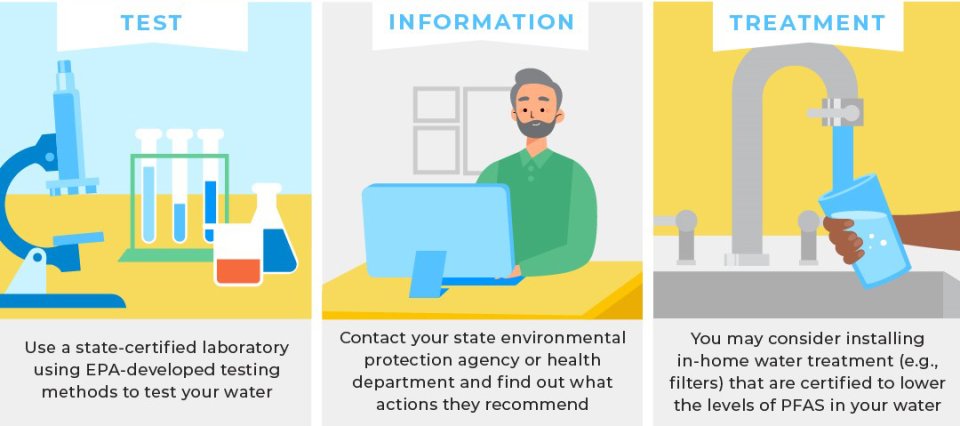
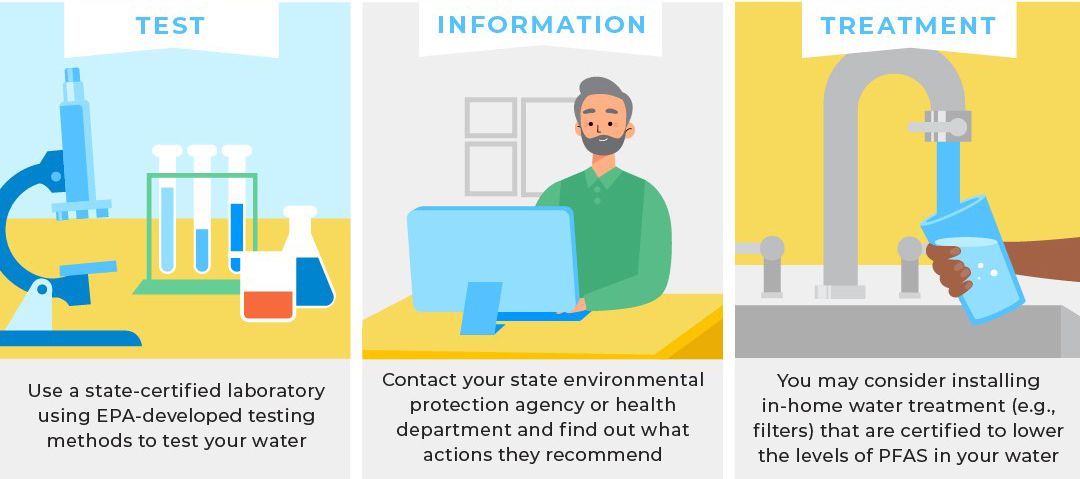
- Contact your state environmental or health agency for detailed advice about how to reduce PFAS exposure or to obtain a list of state-certified laboratories using EPA-developed testing methods in drinking water.
- Consider installing an in-home water treatment system or filtered pitcher that is certified to lower the levels of PFAS in your water. Learn about certified in-home water treatment filters.
- Consider using an alternate water source for drinking, preparing food, cooking, brushing teeth, preparing baby formula, and any other activity when your family might swallow water.
- Continue regular well testing for overall quality of the water and whether it contains PFAS.
Find additional resources about private wells: www.epa.gov/privatewells
What can the EPA Superfund program do about PFAS in my private well?
The EPA's Superfund program may test private drinking water wells as part of our overall site investigation to determine where contamination is coming from, and if it is affecting people’s health. As part of this investigation, we may find levels of PFAS in private drinking water wells. If PFAS levels are high enough, EPA may be able to provide a temporary alternative source of drinking water until we can determine if the PFAS contamination is caused by the Superfund site.
Because PFAS contamination is so widespread in the environment, it's possible that the PFAS in private wells originated from somewhere other than the Superfund site. In that case, EPA would not be allowed, by law, to spend Superfund dollars to address the PFAS contamination. That’s why it's important for families to refer to the actions provided in this fact sheet to help reduce exposure to PFAS chemicals.
EPA will continue to keep the community informed about ongoing cleanup activities at your Superfund site. If you have any questions about PFAS sampling and private wells, please contact your Superfund Community Involvement Coordinator.
Reducing PFAS in Your Drinking Water with a Home Filter
If you learn there are PFAS in your drinking water, then you may consider installing a home filter. A home filter could be an effective way to reduce PFAS levels, and there are a variety of types of filters available at many different price points.
Learn About PFAS in Your Water and Decide if a Filter is Right for You
Many public water systems already have test results for PFAS available. First, contact your local water provider to find out which PFAS, if any, are in your drinking water. You can also search EPA’s database of PFAS water system test results or EPA’s map-based PFAS Analytic Tools to see if your water system has been tested as part of EPA’s monitoring program. If PFAS have not been measured in your water, or if PFAS have been measured but are below federal limits, a filter may not be useful to you.
Your state environmental protection agency or health department may also have more information about PFAS in your drinking water and recommendations for actions you can take.
Types of Filters
There are many water filters on the market, but not all filters address PFAS. If you choose to use a filter, be sure to get one that is certified to remove or reduce PFAS in drinking water. As of April 2024, filter certifications focus on removing the chemicals PFOA and PFOS, which are two specific types of PFAS. A filter can cost as little as $20 or more than $1,000 (not including maintenance costs), with variations between types, brands, and whether they are pitcher filters, installed on your faucet, or for your entire home. There may also be maintenance- and disposal-related costs that also vary between filters. Here are some of the types of filters that are currently available and can be effective at reducing PFAS:
- Charcoal (Granular Activated Carbon or GAC): These filters use carbon to trap chemicals as water passes through them.
- Reverse Osmosis Systems: Reverse osmosis is a process that forces water through an extremely thin barrier that separates chemicals from the water.
- Ion Exchange Resins: Resins are tiny beads that act like powerful magnets that attract and hold the contaminated materials from passing through the water system.
Check for Certification
Certification by an independent entity is an assurance that the filter works as the manufacturer says it does. To find a certified filter, look on the product packaging for a certification by an accredited body. There are currently FACT SHEET Page 2 of 2 five American National Standards Institute-accredited third-party certification bodies that evaluate drinking water filters for PFAS reduction capabilities. Each has a registered trademark that is used on certified products. Links to these certification bodies are provided below. To make sure the filter you select is certified:
- First, check the product packaging for certification to “NSF/ANSI 53” or NSF/ANSI 58” for PFAS reduction.
- If in doubt, check the certification body’s product directory website for testing information or to see if the product has been certified to treat PFAS (such as PFOA and PFOS) found in drinking water. The certification body’s mark will typically be on the packaging. See the table below for links to a product directory for each certification body.
- If still in doubt, you can contact the certification body directly from their websites.
A filter may list claims for PFAS reduction on its outer packaging, in a performance data sheet within the package, or on the manufacturer’s website.
It's important to note that the current certification standards for PFAS filters (as of April 2024) do not yet indicate that a filter will remove PFAS down to the levels EPA has now set for a drinking water standard. EPA is working with standard-setting bodies to update their filter certifications to match EPA’s new requirements. In the meantime, remember that reducing levels of PFAS in your water is an effective way to limit your exposure.
Maintenance is Critical
Filters are only effective if they are maintained according to the manufacturer’s instructions. Not replacing a filter by the manufacturer’s recommend schedule can increase your risk of exposure to PFAS.
Information on Certified Filters
| Certification Body/Link to Product Listing |
|---|
| CSA Group |
| IAPMO R&T, Inc. |
| NSF |
| UL |
| WQA |
Information on the science behind different types of PFAS filters.
How can I reduce my overall exposure?
Drinking water is only one possible source of PFAS. Even though recent efforts to remove certain PFAS from commercial goods have reduced the likelihood of exposure, some household products and indoor air or dust may still contain PFAS. Possible sources can be:
- Drinking water
- Contaminated waste sites
- Fire extinguishing foam
- Manufacturing facility waste
- Consumer products (floss, cosmetics, cleaning products, etc.)
- Food packaging
- Biosolids (recycled sewage used as soil)
- Exposed fish, dairy, meat, and/or vegetables
To reduce exposure, look for PFAS-free labeling and review product Safety Data Sheets.
Avoid eating fish from waterways contaminated with PFAS. You can determine which waterways are of concern by contacting your state or tribal fish advisory programs using EPA's list of state, territory, and tribal fish advisory contacts.
Additional resources:
Download a printable version of the fact sheet: PFAS in Private Wells (pdf)