


EPA Completes Water Assessment Mission in the CNMI and Guam after Super Typhoon Sinlaku
SAIPAN, Northern Mariana Islands – U.S. Environmental Protection Agency (EPA) has completed drinking water and wastewater assessment work in the Commonwealth of the Northern Mariana Islands (CNMI) and Guam. After completion of these Federal Emergency Management Agency (FEMA) mission assignments, drinking water and wastewater work transitions back to local partner agencies.
“EPA’s assessment work after Typhoon Sinlaku was paramount to restoring safe, reliable drinking water in the Mariana Islands,” said Michael Martucci, Acting EPA Regional Administrator for the Pacific Southwest. “The work completed by EPA speeds up our partners’ efforts to restore residents’ confidence in the water they depend on for drinking, cooking, and bathing.”
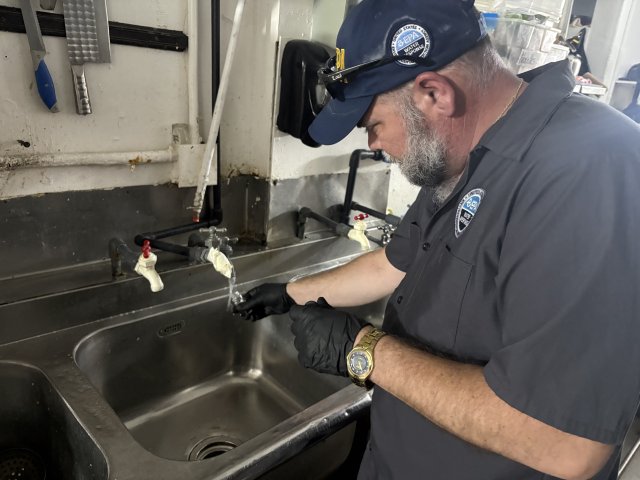
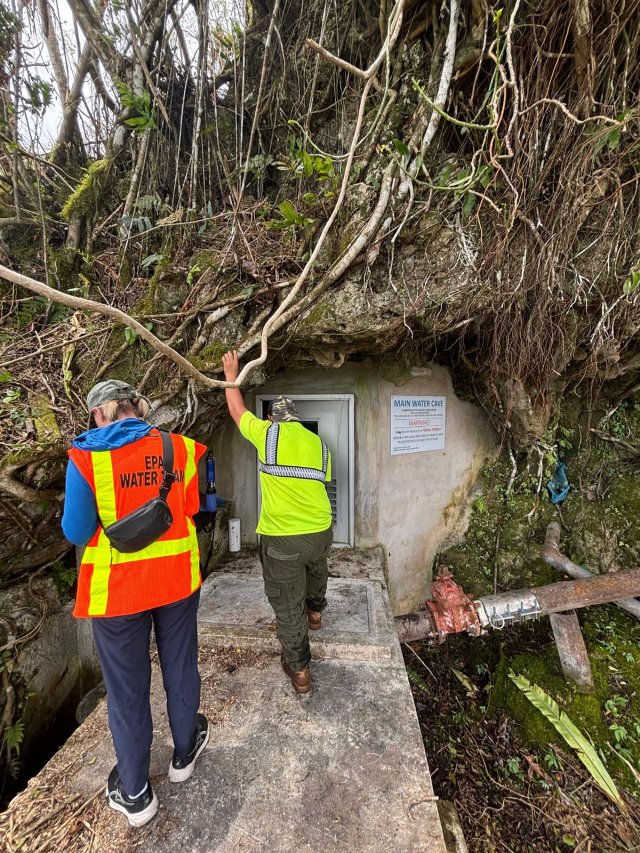
EPA’s Pacific Southwest Water Emergency Team coordinated with the CNMI Bureau of Environmental and Coastal Quality (BECQ) to assess public water systems across the islands. This included drinking water sampling and assessments at restaurants, shelters, schools, water and ice vendors, and temporary water treatment facilities.
Two drinking water technical specialists were sent to Rota, and one to Tinian, to assess the damage to the largest public water system operator as well as water and ice vendors. As a result, most water capacity has been restored in the Mariana Islands.
During its mission, EPA worked with key water vendors and the BECQ laboratory (used to analyze EPA’s 64 water samples) to help prioritize and procure diesel fuel and generators from FEMA in support of water sector needs.
Saipan’s two wastewater plants lost power during and after the typhoon. EPA was able to support wastewater damage assessments following the storm to identify issues and return functionality to the two treatment facilities. Both plants are now operational but are running on generators while the plants wait to reconnect to the electrical grid.
In addition, EPA provided technical support and lab supplies to the Guam Environmental Protection Agency (GEPA).
Learn about EPA’s Pacific Southwest Region. Connect with us on Facebook, Instagram, and X.
###