


What is a Circular Economy?
On this page:
- What is a circular economy?
- Why is it important?
- What is EPA doing to promote a circular economy?
- What other organizations are doing circular economy work?
What is a circular economy?
A circular economy keeps materials and products in circulation for as long as possible. The Save Our Seas 2.0 Act refers to an economy that uses a systems-focused approach and involves industrial processes and economic activities that are restorative or regenerative by design, enables resources used in such processes and activities to maintain their highest value for as long as possible, and aims for the elimination of waste through the superior design of materials, products, and systems (including business models). It is a change to the model in which resources are mined, made into products, and then become waste. A circular economy reduces material use, redesigns materials and products to be less resource intensive, and recaptures "waste," or material that was previously considered to be a waste, as a resource that can serve as feedstock to manufacture new materials and products.
Circularity is embraced within the sustainable materials management approach that EPA and other federal agencies have pursued since 2009. A "circular economy approach" under the SMM umbrella demonstrates continuity in our emphasis on reducing negative life-cycle impacts of materials, reducing the use of harmful materials, and decoupling use of materials from economic growth and meeting society's needs.
Why is it important?
Material recovery has an important role to play in a circular economy. The circular economy, when designed in a thoughtful manner, has the potential to protect the environment, improve economics, and elevate communities. How we extract, use, and dispose of our resources can have compounding effects. That is why EPA developed strategies to identify the key actions needed to reduce the negative impacts materials can cause.
Communities across this nation have been affected by the negative environmental and health impacts caused by a non-circular economy. Many landfills and manufacturing and processing facilities are located close to communities. EPA's circular economy for all aims to reduce waste and toxic materials and reuse critical minerals during manufacture and processing. Safe jobs and healthy communities are the goals.
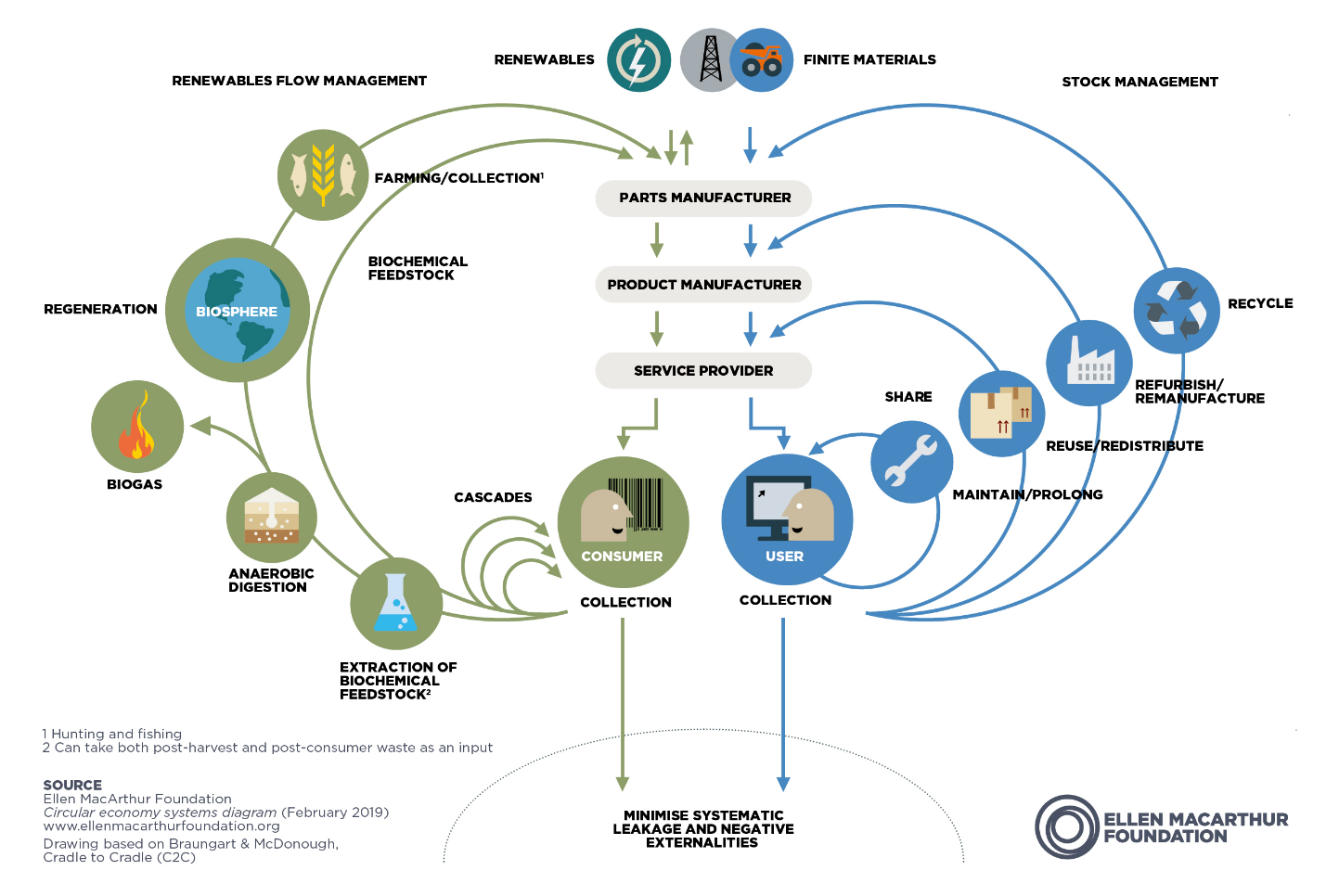
What is EPA doing to promote a circular economy?
- EPA published a series of strategies on building a circular economy for all.
- EPA is supporting improved waste management infrastructure and recycling nationwide through the Solid Waste Infrastructure for Recycling and the Recycling and Education Outreach grant programs.
- EPA is advancing the sustainable management of batteries and electronics to reduce waste, recover materials - including critical minerals - and prevent pollution.
- Across the solid waste spectrum, EPA is examining how materials like scrap tires and fly ash (a coal combustion byproduct) can be recovered to conserve resources, helping to make the most of raw materials.
What other organizations are doing circular economy work?
- Ellen MacArthur Foundation.
- European Union.
- National Institute of Standards and Technology.
- National Renewable Energy Laboratory: Circular Economy Modeling and Analysis Tools.
- Organisation for Economic Co-operation and Development.
- Systems Change Lab.
- United Nations Environment Programme: Building Circularity.
- U.S. Chamber of Commerce Foundation: Circular Economy Toolbox for Small Businesses.
- World Circular Economy Forum.