


Calculate Your Radiation Dose

Use the Radiation Dose Calculator below to estimate your yearly dose from the most common sources of ionizing radiation in your everyday life. The estimates are presented as an effective dose, which is used by experts to measure radiation’s effect on human health. Once you finish using the calculator you can compare your dose to the average and read an explanation of your results.
On this page:

How to Use This Calculator
Step 1: Choose either U.S. or International (SI) Units.
This Calculator helps users estimates their effective doseThe amount of radiation absorbed by an object or person, adjusted to account for the type of radiation received and the effect on particular organs. The unit used for effective dose is sievert (Sv, the international unit) or rem (U.S. unit ).. It defaults to the International (SI) unit, millisievert (mSv). To change it to the U.S. unit, the millirem (mrem), use the pull-down menu and select "mrem." Note: 100 mrem mrem = 1 millisievert (mSv). To learn more about effective dose, visit the Radiation Terms and Units webpage.
Step 2: Select an option from all the dropdowns that apply to your life
The calculator will estimate your yearly dose and give a breakdown for which radiation sources make up more of your yearly dose.
Calculate Your Dose
Use a computer for optimal experience using the tool.
How your Dose Compares to the Average

The average yearly radiation dose per person in the U.S. is 6.2 mSv or 620 mrem, which equals the dose from approximately 62 chest x-rays. Figure 1 shows how each of the four categories contribute to the average American’s annual radiation dose. If you do not get many medical procedures done in a year, your dose may be lower than this average, because this average includes people who get a lot of medical procedures.
Many aspects of your life could affect your overall radiation dose in a year, but some sources of radiation will be more significant contributors than others.
Results Explained
Two categories with the highest radiation dose for most people will be Background Radiation and Radiation in Medicine. These are also the sources you have the most control over. Learn more about all types of radiation sources.
Background Radiation
Reducing radon exposure saves lives.In most cases where background radiation is high enough to be a cause for concern, it is typically due to indoor radon levels. Radon is a radioactive gas that you can test for and treat in buildings and homes, especially in basements. It forms naturally when radioactive metals like uranium breaks down in rocks, soil and groundwater.
The Radiation Dose Calculator defaults to the average radon exposure, 1.3 pCi/L, if you don’t know your radon levels. However, radon exposure can rise into the thousands of pCi/L. EPA recommends that Americans consider fixing their home for radon levels between 2pCi/L and 4pCi/L. Radon levels can vary greatly between residences, so even if your neighbor has low radon levels, you can still have high radon levels. Radon is a leading cause of lung cancer among non-smokers, and no matter where you live, it’s recommended you test your home for radon—it’s easy and inexpensive. Find a Radon Test Kit or Measurement and Mitigation Professional.
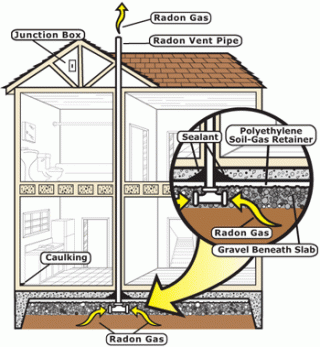
Image of inside of two story home illustrating radon reducing construction techniques. The other significant sources of background radiation come from naturally occurring radiation from the ground and cosmic radiation from space. Those are less in your control compared to indoor radon levels in your home.
Radiation in Medicine
Medical imaging is known to benefit patients.Medical imaging procedures can often deliver radiation doses in the range reported by the Calculator and up to many orders of magnitude higher. Conversations with your healthcare providers can help you understand the medical need for procedures requiring the use of radiation. When justified, modern medical imaging procedures provide benefits that far outweigh any health risks associated with radiation exposure. It is important to remember that the decision to undergo medical imaging should be based on medical need and not on cumulative doses from prior radiation exposure.
The Radiation Dose Calculator is designed to help you understand the various sources of radiation in your life, but when it comes to radiation in medicine, it should not be used as an indicator of your health risk from radiation used in medicine. EPA collaborates with other agencies to help regulate radiation in people’s lives. Go to Radiation Resources Outside of EPA to find out where you can learn more about specific sources.
Consumer Products/Services
Most consumer products, aside from smoking, have relatively small doses. The regulations for consumer products are often made by other agencies, often with the help of EPA guidance documents.
Industrial Sources
Industrial sources have extremely low doses compared to other sources listed in this tool. They would not be significant enough to include if it weren't for public awareness and interest in this source.