


Public Health
Public Health Before a Brownfield Cleanup
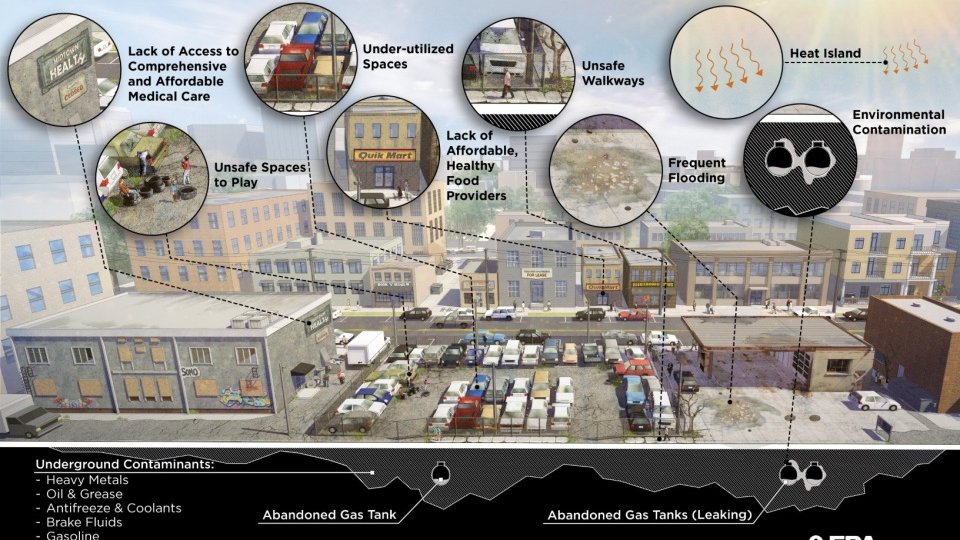
Community health near brownfields is affected by environmental, socio-economic and extreme weather factors.
- Environmental: Exposure to hazardous substances, pollutants, or contaminants on a brownfield site – such as Lead (Pb), PCBs, or PFAS – can be harmful to human health. Other environmental hazards like mold and poor air or water quality can also negatively impact community health.
- Socio-Economic: Brownfield sites can contribute to blight and disinvestment in the area. Reduced investment and declining property values near the brownfield site may strain the local governments’ ability to provide critical services – such as access to quality education, affordable housing, healthy foods, transportation, greenspace and medical care – that support the community’s well-being.
- Extreme Weather: Extreme weather events - such as flooding or heat waves - can mobilize contaminants at a brownfield site, spreading contamination. Droughts and other extreme conditions can also cause acute health concerns such as dehydration and heat stroke, as well as can exacerbate existing chronic health conditions such as asthma.
With extreme weather events and natural disasters increasing in frequency and intensity, public health risks, and severity of these events, are increasingly impacting community health.
Environmental, socio-economic, and extreme weather events often compound near brownfield sites, disproportionately affecting sensitive populations. These compounding effects are known as cumulative impacts.
Planning for Healthy Communities
Incorporating public health improvements into the planning for brownfields assessment, cleanup and reuse can minimize health disparities, strengthen community cohesion, and make the site remedy and redevelopment more resilient.
To maximize positive public health outcomes:
- Engage the neighboring community in planning and decision-making throughout the brownfield project.
- Prioritize engagement with vulnerable populations who may be harder to reach.
- Emphasize language accessibility and cultural humility to maximize diverse community involvement.
- Identify project champions from the community living next to the brownfield who can inform public health concerns, center community-specified needs, and improve community perception.
Ways to engage the community include:
- Reaching out and partnering with organizations such as schools, youth groups, religious institutions, and nonprofit organizations.
- Organize neighborhood events or activities which are accessible, comfortable, and enjoyable.
- Gather community input.
- Establish a community action board.
In addition to working directly with the community, partnering with local health departments or agencies to obtain baseline health and environmental data is important for informing redevelopment planning. A Community Health Assessment is a great way to identify health concerns in the community, such as safety challenges, lack of sidewalks, or lack of affordable and healthy food options. Alternatively, Health Impact Assessments can compare how site redevelopment plans can impact health and well-being.
Incorporating community-centered development approaches into your planning efforts can help prevent displacement, create local avenues for employment, and prioritize affordable housing that strengthens the local community.
Healthier Brownfield Reuses
Centering public health in brownfields reuse can improve community health, promote a healthier workforce, and improve community satisfaction.
Environmental Factors
Identifying where environmental contaminants are present, how they can move and how the nearby community may be exposed is critical to understand early in a brownfield revitalization project. Contaminants can travel through soil, waterways or air, and exposure can occur through skin contact, inhalation or ingestion. Exposure to harmful levels of contaminants present in soil, water and air – such as Lead, PCBs or other pollutants – may increase risks of cancer, respiratory issues and neurological effects.
Work with your State or Tribal Response Program representatives to ensure cleanup meets health standards for site reuse.
Socio-Economic Factors
It is important to understand the socio-economic factors which contribute to blight and disinvestment in the area near a brownfield site. These factors, such as minimal greenspace, limited access to healthy foods, and public transportation issues, are common community concerns and needs. Addressing these through brownfield reuse can effectively promote healthier, happier communities.
-
Public health considerations in communities with a brownfield.
-
Land revitalization considerations which incorporate public health.
-
A healthier place to live before (Spanish).
-
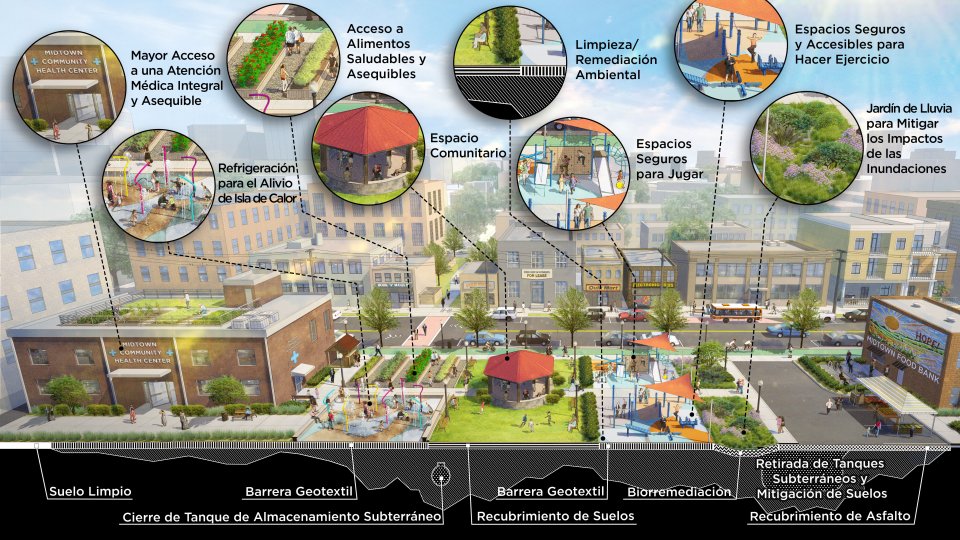
A healthier place to live after (Spanish)
A Healthier Place to Live Before and After (pdf) (27.11 MB, 11-01-2025, 560F25237)
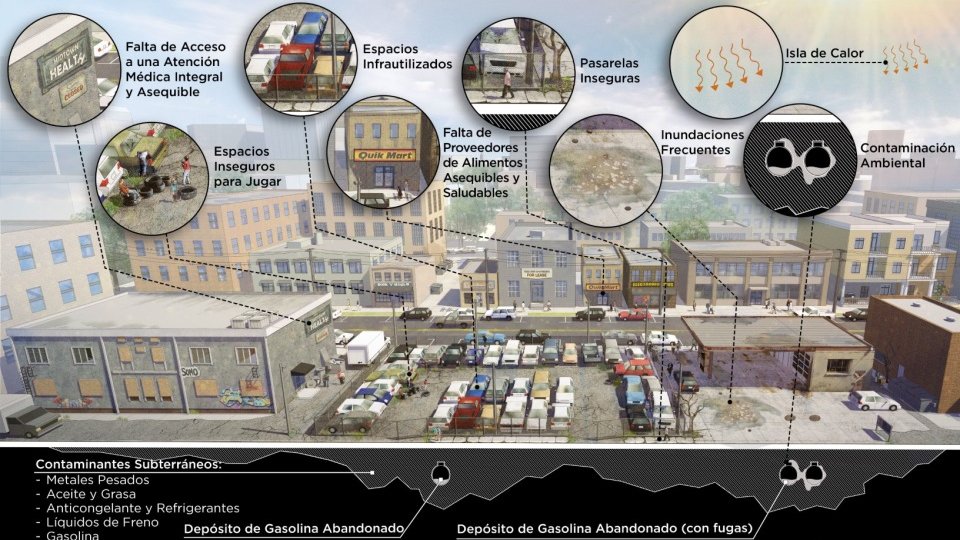
Un Lugar Más Saludable para Vivir: Antes y Después (pdf) (9.83 MB, 11-01-2025, 560F25237)
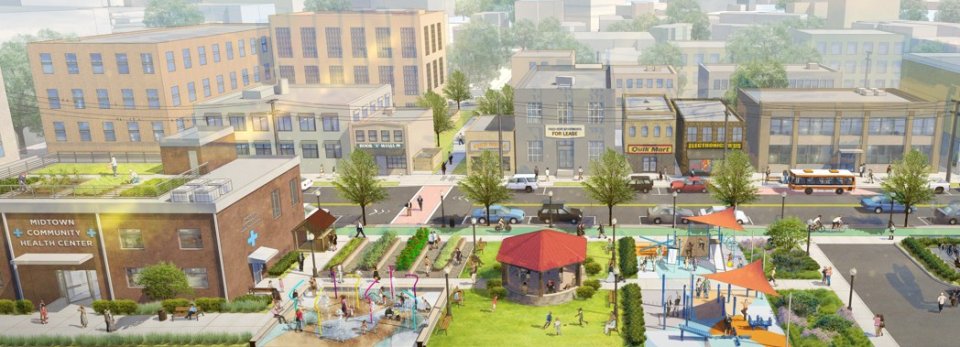
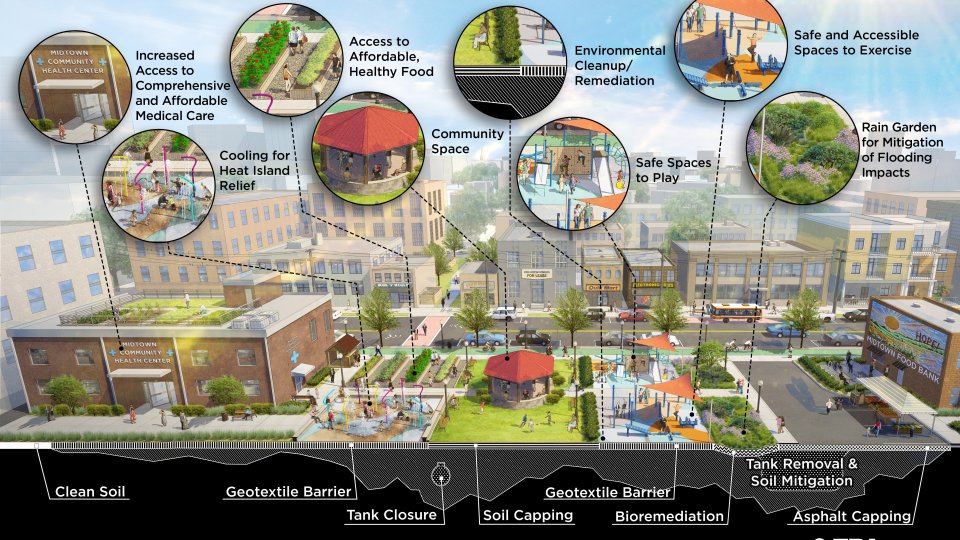
The above images share examples of how a community may benefit from incorporating public health strategies into brownfield site reuse planning:
- Increased Access to Comprehensive and Affordable Medical Care: A local, affordable health center can offer access to important services such as Lead exposure monitoring for children, preventative screenings, well visits, care for acute health problems, as well as care for chronic conditions such as diabetes and hypertension.
- Cooling for Heat Island Relief: Shaded structures, trees and splash pads can reduce heat exposure and minimize incidence and severity of heat-related conditions.
- Access to Affordable Healthy Food: Community gardens and food banks can provide affordable access to vitamin-rich foods like leafy greens and fruits, which help prevent nutrient deficiencies that can cause impaired immune function and stunted growth in children.
- Community Space: Safe spaces to gather enable important social connections and knowledge exchange, which builds community and can reduce the effects of anxiety, depression, and stress-related conditions.
- Environmental Cleanup/Remediation: Cleaning up environmental contamination can help reduce exposure, which may also reduce the risk of developing cancer, respiratory issues, and neurological diseases associated with exposure to the contaminants.
- Safe Spaces to Play: Play spaces that are safe from environmental contamination can reduce opportunity for exposure. Additionally, playgrounds provide critical learning, engagement, and socialization opportunities for healthy childhood development.
- Safe and Accessible Spaces to Exercise: Designated walkways and publicly available exercise spaces can be used by people of all ages to improve mobility, balance, and coordination; promote heart health; and lower joint pain and arthritis.
- Rain Garden for Mitigation of Flooding Impacts: Rain gardens absorb and filter stormwater, reducing flooding and related risks such as injury and water-borne diseases. They also restore natural flora and create green space, which can improve community safety, mental health and well-being.
Extreme Weather
Incorporating Resilient Brownfields Planning into brownfield site reuse can help reduce impacts from natural disasters and extreme weather events. Potential considerations may include:
- Introduce more trees or vegetation.
- Incorporate shaded structures, especially in gathering areas like bus stops, parks and pavilions.
- Establish cooling centers and expand residential cooling options.
- Improve energy efficiency and retrofit residential buildings.
- Construct green buildings.
- Incorporate fire-resistant materials and strategies into site reuse.
-
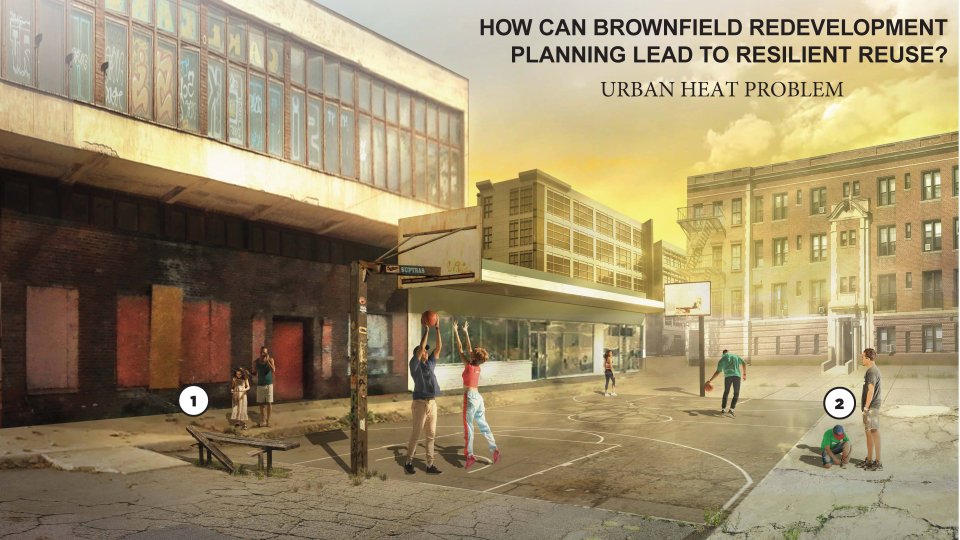
1. Pavement and dark, heat-absorbing materials 2. Lack of plants and green space. These contaminated buildings are brownfield sites. Free technical assistance or brownfield grants can help communities investigate, assess, clean, and plan safe and resilient reuses. Reuses can reduce over-paved and under-planted spaces and replace dark materials, roofing or pavements that absorb heat and raise nearby temperatures, which otherwise may pose health risks to residents.
-
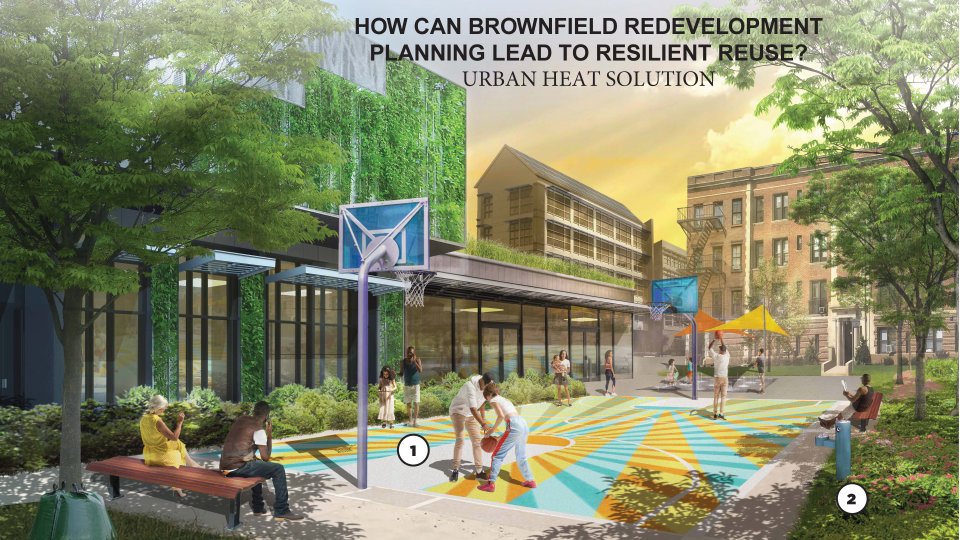
1. Use lighter color and reflective pavement and materials 2. Plant trees, add water features and expand green space. Cleaning brownfields brings attention and investment for resilient reuses. Adding plants and trees to buildings and public areas expands greens space, bringing cooling and visual benefits. Replacing or reducing areas covered with dark materials with light color, reflective coated materials can reduce heat absorption and increase reflection. The addition of a fountain, pool, splashpad or water elements can bring a welcome, cooling features for play.
-
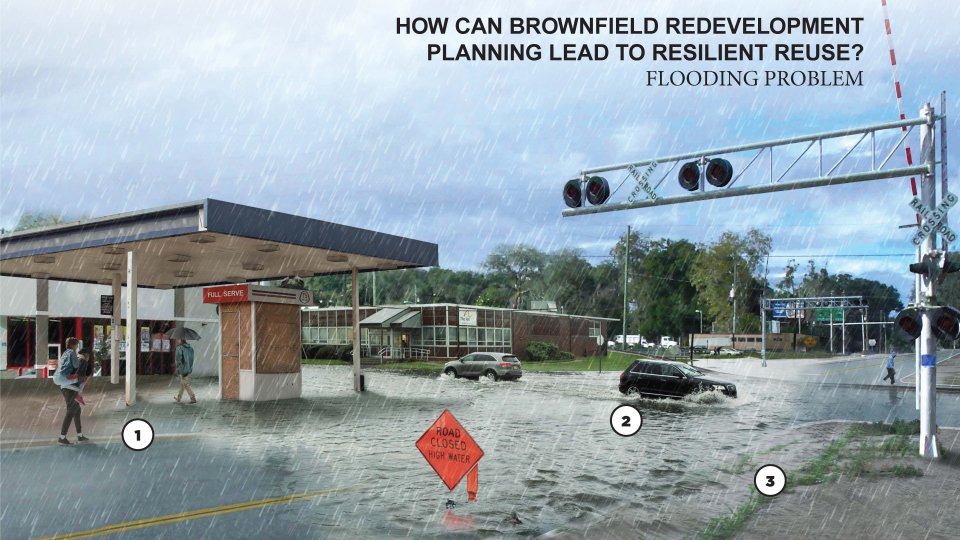
1. Potentially contaminated brownfield site 2. Paved, impervious site and road areas 3. Poor drainage for stormwater management. Increased frequency and intensity of flooding at potentially contaminated brownfields, like abandoned gas stations, can affect groundwater levels, equipment and move surface and subsurface contamination. Paved areas without spaces to safely manage contaminant movement or to direct stormwater can increase risks.
-
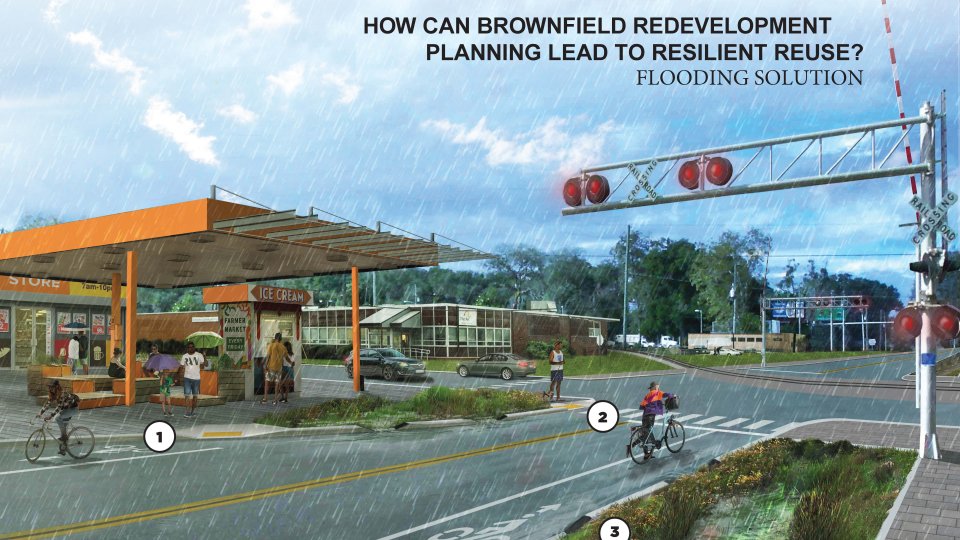
1. Remove and reduce contaminants to clean the site 2. Add safe, pervious surfaces for walking or biking 3. Improve drainage and stormwater management. Remove contaminants to clean the brownfield site and reduce contaminant movements. Plan to redirect water off site. Add bioswales and curb cuts to create or expand areas for drainage and stormwater management and previous pavements. Plan safe reuse for people to minimize exposure risk and create or expand areas for drainage and stormwater management.
-
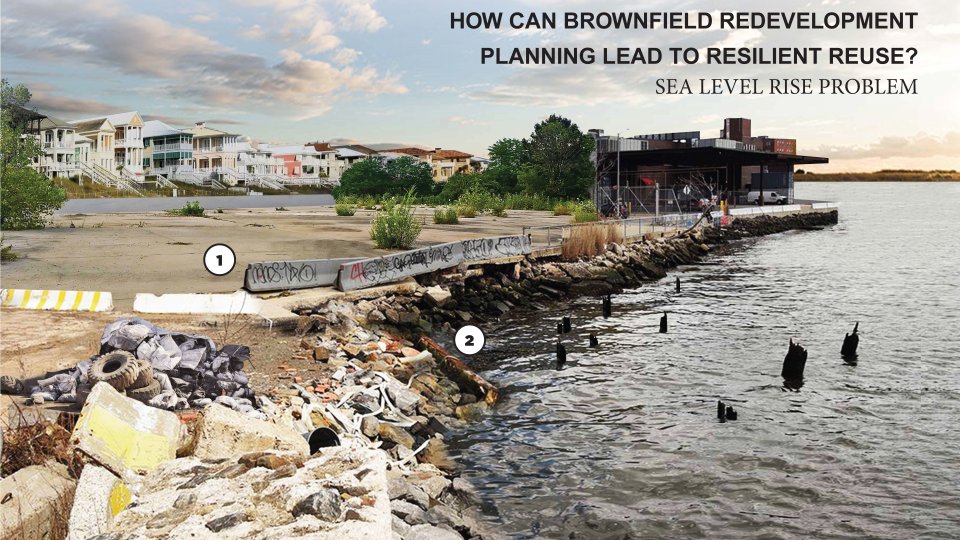
1. Contaminant migration 2. Shoreline erosion, site, infrastructure and storm damage. Coastal brownfields are vulnerable from surface flooding, sea-level rise, storm surge, saltwater intrusion and coastal erosion and infrastructure damage. Site contaminants may move and impact nearby areas from eroding shorelines, rising seas and failing structures. Assessment, cleanup and reuse planning should reflect future sea level rise and storm projections for resilient reuses.
-
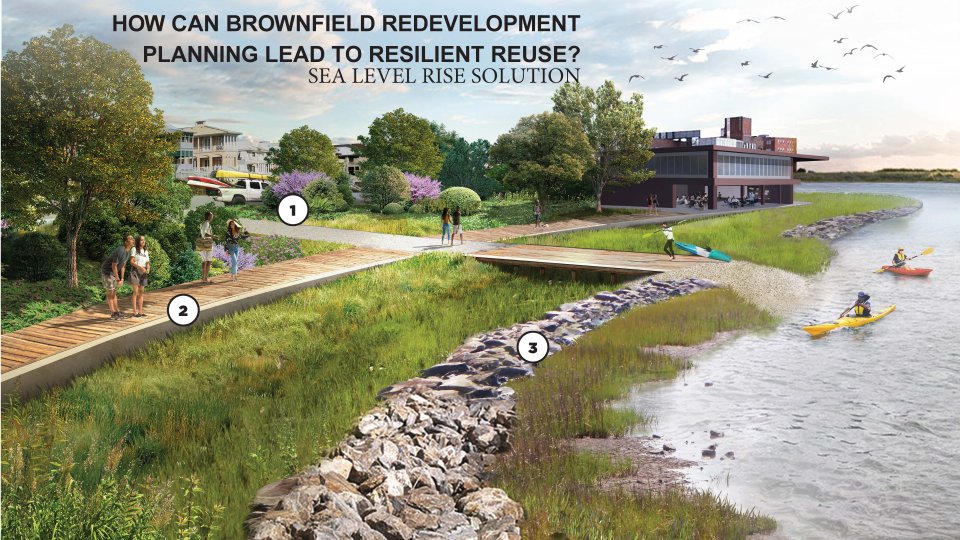
1. Clean contaminants and improve infrastructure 2. Provide shoreline protection with nature-based solutions 3. Expand living shoreline with salt tolerant native plants. Cleanup of a shoreline contaminated brownfield reduces environmental and public health risks from contaminant movement, structural hazards, and sea level rise. Reuse planning can incorporate resilient approaches that reflect changing environmental conditions. Adding resilient features and salt tolerant native plants will expand protective ecological restoration, natural area amenities, recreation options, and build spaces for community use.
How Can Brownfield Redevelopment Planning Lead to Resilient Reuse (pdf) (27.67 MB, 01-01-2023, EPA-560-F22-95)
Health Monitoring
Health monitoring evaluates human exposure to contaminants over time. Health monitoring is conducted through blood testing, which measures levels of contaminants (such as Lead) in the body, and medical evaluation (which often looks at symptoms associated with exposure). Health monitoring is an important approach for those suspected of exposure to harmful contaminants on or near a brownfield.
Local government recipients of an EPA Brownfields Grant are eligible to use up to 10 percent of total grant funding for health monitoring activities associated with known hazardous substances contamination at a brownfield site. Health monitoring activities must be conducted in direct partnership with your local, state or Tribal public health agency. Performing health monitoring activities for a hazardous substance-contaminated site can help identify and address potentially harmful exposures to residents.