


National Lead Poisoning Prevention Week
Información relacionado en español.
2026 Theme: Keep Kids Safe From Lead
National Lead Poisoning Prevention Week (NLPPW) brings together individuals, organizations, industry and state, Tribal, territorial and local governments to reduce childhood exposure to lead by increasing lead poisoning prevention awareness and education. The Centers for Disease Control and Prevention (CDC), U.S. Environmental Protection Agency (EPA), and U.S. Department of Housing and Urban Development (HUD) have collaborated to create comprehensive resources for communities.
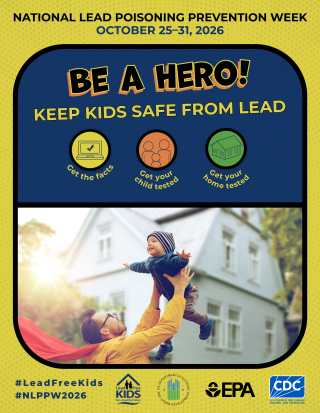
Lead poisoning remains a serious threat to children's health. HUD estimates that 3.3 million U.S. families with a child under age 6 live in homes with conditions that could expose their children to lead-based paint hazards. Even very low levels of lead in children’s blood are linked to negative effects on intellect, concentration, behavior and academic achievement. NLPPW highlights the many ways parents, caregivers and communities can reduce children's exposure to lead and prevent its harmful health effects.
NLPPW takes place October 25-31, 2026!
NLPPW takes place the last full week of October, which is also Children’s Health Month, a time to raise awareness about children’s environmental health, including the dangers and potential health impacts of lead.
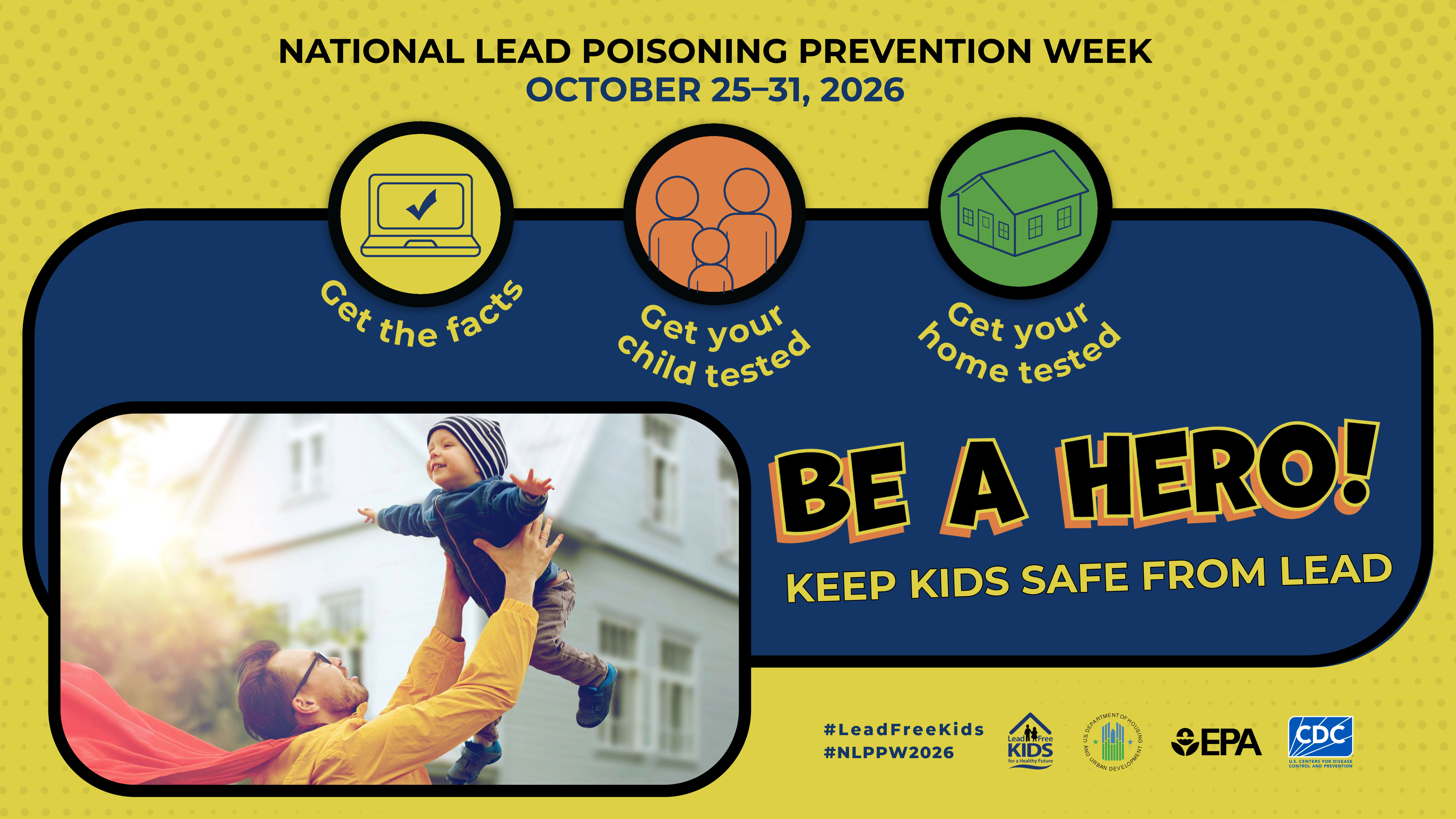
The 2026 NLPPW theme is "Keep Kids Safe from Lead,” which focuses on three key messages:
- Get the Facts: Learn about lead hazards in your environment.
- Get Your Child Tested: Ensure early detection through a blood lead test.
- Get Your Home Tested: Identify and address potential lead sources.
This page is a starting point to help individuals, communities and Tribal, state and local governments and organizations ("partners") develop customized messaging to meet the needs of different communities. Our partners are a vital resource for spreading awareness about NLPPW and reducing childhood lead exposure.
Key Lead Poisoning Information

Lead poisoning refers to exposure to lead that results in harmful health effects, particularly at high blood lead levels. It is typically used to describe more severe cases that may require medical attention. However, even low levels of lead exposure can be harmful, and no safe level of lead in children has been identified.
- Even low levels of lead in the blood can negatively impact a child's health and should be viewed as a concern. Understanding lead's dangers and sources is the first step in protecting your family.
- Lead is highly toxic, especially to developing minds and bodies. Even small amounts can potentially cause:
- Delayed growth and development
- Lower IQ and learning difficulties
- Brain and nervous system damage
- Hearing, speech and behavioral problems
- Children younger than 6 years of age are particularly vulnerable to lead exposure. This is because their bodies are still developing and growing rapidly. Young children also tend to put their hands or other objects that may be contaminated with lead dust into their mouths.
- About 3.3 million American households with children younger than 6 years old have lead exposure hazards from lead in deteriorated paint, dust or soil.
- Lead has been used historically in a wide variety of products found in and around our homes including collectible items no longer produced in the United States but passed down through generations. Lead can also be found in some consumer products made in other countries that are imported into the United States, especially in products used in immigrant communities. Some of these products include:
- Painted and plastic toys and toy jewelry
- Jewelry
- Cosmetics
- Candy
- Imported, hand-made, lead glazed pottery
- Candles
- Dishware used for cooking and storing food
- Ceremonial or religious powders
- Folk remedies and traditional medicines
- Plumbing materials, including faucets
- Ammunition
- Fishing tackle
- Spices from some sources
- Children are at greater risk for lead exposure if they:
- Live in or visit a home built before 1978, especially when the home’s paint is not well maintained, or if repairs or renovations are not done using lead-safe work practices.
- Live with adults whose jobs or hobbies involve working with lead.
Get the Facts

- Acting now can result in better health outcomes. You can reduce your family’s risk from lead exposure by taking steps at home. Anything you can do to reduce lead exposures can significantly impact and improve life outcomes, particularly for young children who are the most vulnerable. If you have young children, it is crucial to determine if they have been exposed to lead and learn how to prevent and decrease further exposure.
- Lead can be found inside and outside the home. Approximately three-quarters of the homes in the United States built before 1978 still contain some lead-based paint. Lead from cracked or chipped lead-based paint, paint chips and dust can pose serious health hazards, particularly to young children and pregnant women.
- Adults and children can get lead into their bodies by:
- Breathing in lead dust, especially during activities that disturb lead-based paint (such as renovations, repairs or painting), or from certain jobs or hobbies that involve working with lead.
- Swallowing lead dust that settles on food, food preparation surfaces, floors, window sills and other places.
- Eating paint chips or soil that contain lead.
- Playing outdoors on artificial turf that contains lead or on playground equipment that contains lead-based paint.
- Drinking water contaminated by lead from pipes, plumbing or fixtures that contain lead.
- Ingesting food contaminated with lead, including certain spices and traditional remedies.
- Landlords must disclose any known lead-based paint or lead-based paint hazards before they rent or sell a home that was built before 1978 and provide a copy of the EPA/CPSC/HUD Protect Your Family from Lead in Your Home pamphlet as required by the Lead-Based Paint Disclosure Rule. EPA and HUD also provide sample forms for disclosing this information.
- Lead can get into drinking water from lead pipes, faucets and fixtures. Use EPA’s Protect Your Tap Guide to find out whether you have lead pipes in your home.
- Lead may also be brought into the home on work clothes, shoes, hair and pets.
- To reduce potential exposure to lead in some consumer products, do not allow children to play with recalled toys, toys manufactured before 2009, certain imported toys, or vintage and antique items, as these may contain lead-based paint or higher levels of lead in their materials.
- Children with healthy diets absorb less lead. Encourage a well-balanced diet of fruits, vegetables, grains, dairy and protein-rich foods. Foods that are higher in calcium, iron and vitamin C may help reduce the body’s absorption of lead.
Get Your Child Tested

- A blood test is the best way to find out if a child has lead poisoning. A child with lead poisoning may not have visible signs or symptoms and many affected children look and act healthy. Talk to your child's healthcare provider about getting a blood lead test if there's any possibility of exposure.
- Act early to get your child tested for lead. Children’s blood lead levels tend to increase from ages 6 to 12 months and tend to peak at ages 18 to 24 months.
- Blood lead tests are required for the following groups:
- Children at ages 12 and 24 months who are enrolled in Medicaid.
- Children between 24 and 72 months who are enrolled in Medicaid with no record of a previous blood lead test.
- Blood lead tests are recommended for the following groups:
- Children ages 12 and 24 months who are living in areas that are at higher risk for exposure to lead or who belong to populations that are at higher risk.
- Children or other family members who have been exposed to lead.
- Children who should be tested under their state or local health testing plan.
- CDC provides recommended actions based on blood lead levels for children.
- Ask your healthcare provider to explain the blood lead test results, including how they compare to the CDC blood lead reference value (BLRV) of 3.5 micrograms per deciliter (μg/dL).
- The BLRV identifies children with higher blood lead levels when compared to the blood lead levels of most U.S. children (97.5% of those ages 1–5) and helps guide follow-up actions to prevent further exposure.
- Based on the blood lead level, a healthcare provider may recommend removing lead sources from the child’s environment, improving nutrition (including iron and calcium), connecting to early education services and scheduling follow-up testing. For very high levels, medication may be needed to remove lead from the body.
- Learn from CDC about getting your child tested for lead.
Get Your Home Tested
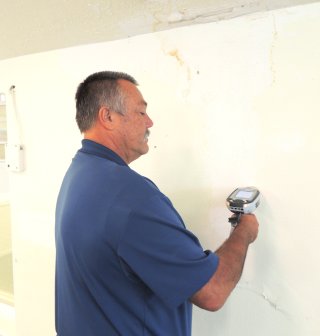
If you are planning a renovation, repair or painting (RRP) project in a home built before 1978, you should do the following.
- Determine the construction year. Find out what year your home was built. Homes built before 1978 may have lead-based paint.
- Have a professional inspection. Hire a certified lead-based paint inspector or risk assessor to determine if your home has lead-based paint or assume it has lead-based paint.
- Hire certified contractors: Hire a lead-safe certified contractor trained in lead-safe work practices using EPA's Lead-Based Paint Professional Locator.
- Use DIY lead-safe work practices. Use EPA's do-it-yourself (DIY) lead-safe work practices for home renovation projects if you decide to do the work yourself.
- Avoid DIY removal of lead-based paint (e.g. lead abatement). Do not attempt to remove lead-based paint yourself. Find more information about lead abatement, inspection and risk assessment activities.
- Become lead-safe certified or hire a certified contractor before beginning any work if you rent all of part of your home, operate a childcare center in your home, or buy, renovate, and sell homes for profit (i.e., a house flipper). For assistance, contact your local department of health or department of environmental quality.
If you are buying a pre-1978 house, the seller is required to disclose known information about lead-based paint and/or lead-based paint hazards before you commit to the sale and provide a copy of EPA’s Protect Your Family from Lead in Your Home pamphlet as required by the Lead Disclosure Rule to provide. EPA and HUD also provide sample forms for disclosing this information.
To find out for certain if there is lead in your drinking water, have your water tested. Contact your local health department or water company to find out about testing your water.
Ideas for Awareness Raising Activities
Transform awareness into action with community engagement. Choose activities that align with your resources and community needs.
General

- Host lead poisoning prevention webinars or workshops featuring local experts and community partners.
- Integrate lead poisoning prevention activities into existing events like health fairs or community festivals.
- Include lead poisoning prevention activities during events for parents at child care and early learning centers.
- Provide educational materials to local businesses, local home improvement stores, remodeling companies, home inspectors, real estate developers and your local Chamber of Commerce and ask them to incorporate lead poisoning and lead exposure prevention content into their customer communications.
- Connect with schools to establish community service projects and internships focused on lead prevention.
- Raise awareness on social media!
- Launch social media campaigns using #NLPPW2026, #LeadFreeKids and community hashtags.
- Host live Q&A sessions on social media with experts online or at community platforms.
- Create shareable content that partners can amplify through their networks.
Healthcare Providers

- During NLPPW, set aside at least one day to provide free blood lead testing for children younger than age 6 years who are at higher risk for lead exposure. Arrange in advance with clinics, healthcare facilities, public health departments or hospitals for testing either at their locations or at community events.
- Distribute lead educational materials, especially in communities with many pre-1978 homes.
- Train healthcare staff on lead exposure symptoms and health effects.
- Host a healthy cooking demonstration, featuring healthy recipes that include calcium, iron and Vitamin C, to promote a nutritious diet. To get started, check out EPA’s Foods that Contain Calcium, Iron & Vitamin C for an ingredient list.
- Offer a community webinar on the importance of lead screening and testing.
Community Leadership

- Issue press releases and public announcements highlighting local lead hazards and prevention efforts.
- Sample script: “Keep kids safe from lead! As a community leader, I support efforts to reduce lead exposure in our communities, ensuring healthy homes and safe drinking water. Join me in shielding children’s futures this National Lead Poisoning Prevention Week.”
- Speak about lead hazard prevention at a local community event, activity or town hall.
- Share NLPPW information and content with the communities you serve and with the leaders who represent them.
- Develop a plan to address lead in your community using EPA’s Local Lead Action Plan Guide.
- Educate property owners about their responsibilities when leasing pre-1978 housing and consider partnering with your local health or environment department to support related outreach.
- Direct state and local programs on how to find a HUD Lead Hazard Reduction and Healthy Homes grant program to help test and address lead hazards in owner occupied and rental homes built before 1978 where families of limited resources live.
Business
- Host workshops at your local home improvement and hardware stores on using lead-safe work practices when conducting DIY home remodeling and renovation projects.
- Host an informational workshop for new and existing contractors on EPA and/or state regulations, industry standards and the process for becoming an EPA- or state-certified lead-safe contractor.
- Publicize NLPPW events and activities on your community boards.
- Post event notices and other messaging in retail establishments leading up to and during NLPPW.
- Use EPA’s Renovate Lead-Safe Media Kit to promote the availability of lead-safe certified contractors and DIY lead-safe work practices.
- Use HUD’s Lead Safe Housing Rule Toolkit to learn how you are protected by rules that apply to almost all ownership, rentals and sales of pre-1978 housing to keep children and occupants safe, regardless of federal assistance.
Digital Materials
A common visual identity is important for increasing NLPPW’s impact. The materials below may be customized to include your organization’s logo(s) and information. When creating NLPPW materials for your community or organization, be sure to use the NLPPW flyers, banners, icons, key messages and social media graphic to tie your local efforts to the national effort.
Flyer & Web Banner
Use a flyer or banner to promote your NLPPW events and activities. You can download the files below or modify the customizable files to include your organization’s logo and event information.
The 8.5” x 11” NLPPW 2026 Flyer (pdf) flyer is available as a PDF and can be printed in larger formats. The NLPPW 2026 Customizable Flyer (pptx) can be used to edit the flyer with community-specific information or translate into additional languages used in your community.
The high resolution NLPPW 2026 Web Banner (png) is available in horizontal orientation.
Social Media Image
Use the NLPPW 2026 Social Media Image (png) on your organization’s website, blog, newsletter and social media accounts with any of the 2026 sample posts and/or your own social media posts. The NLPPW 2026 Customizable Social Media Image (pptx) can be used to edit the graphic to include your organization’s information or translate into additional languages used in your community.
Lead-Free Kids Icons
Add the Lead Free Kids icon when creating your own materials for NLPPW to connect your local efforts to the national effort.















Printable Banner
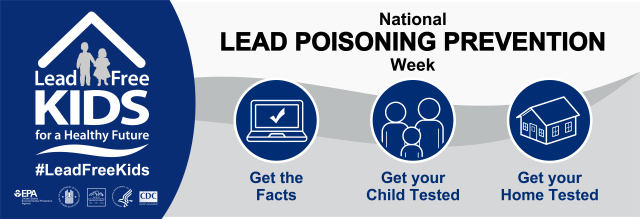
Download and print the 6'x2' Printable NLPPW Banner (pdf) to display during NLPPW events and activities.
Sample Social Media
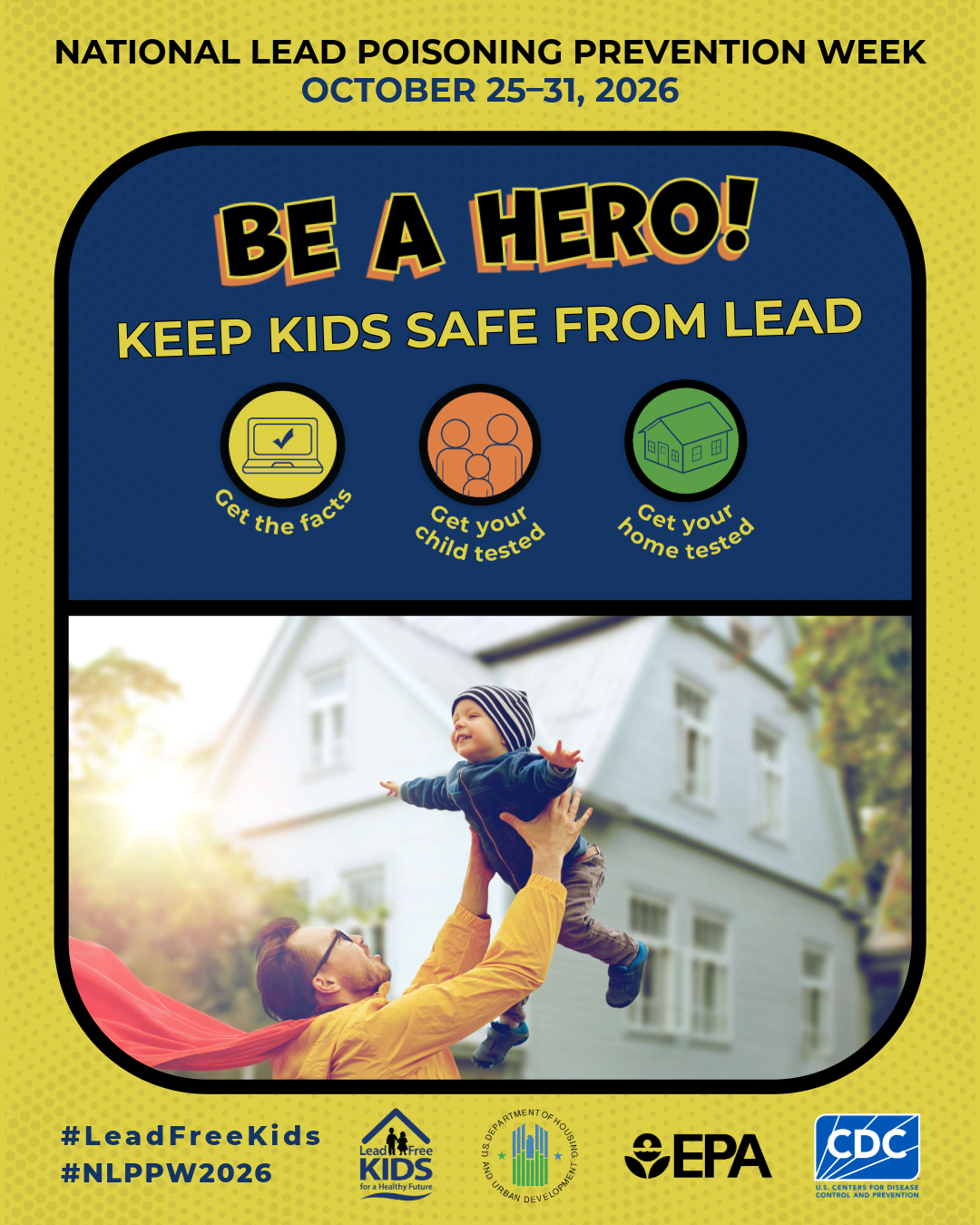
Be part of the #NLPPW2026 conversation by adapting the information and ideas shared on this page. We encourage you to post social media connected to the key messages and the "Keep Kids Safe From Lead" theme on your channels and tag us.
- X: @EPA, @CDCgov, @HUDgov
- Facebook: EPA, CDC, HUD
- Instagram: @EPAgov, @CDCgov, @HUDgov
- Información en español en X: @EPAespanol
- Información en español en Facebook: EPAespanol
Sample social media posts are shared below for you to modify and share on each day of NLPPW. Don't forget to include #NLPPW2026, #LeadFreeKids and community/organization hashtags in your social media posts!
| Daily Theme | Sample Post |
|---|---|
| Monday: Keep Kids Safe from Lead | Be a hero in your community and keep kids safe from lead. 👶 Join @CDCgov, @EPA, and @HUDgov this National Lead Poisoning Prevention Week, Oct. 25–31, 2026, to protect children and families. 🦸♂️ epa.gov/lead/nlppw |
| Be the hero at home and shield children’s futures from lead. Learn more about keeping a healthy home during National Lead Poisoning Prevention Week, Oct. 25–31, 2026! 🏠 hud.gov/contactus/healthy-homes | |
Create your post with your NLPPW activity by filling in the highlighted sections below! Lead is a supervillain in homes, so we need to be superheroes. That’s why we’re organizing [insert activity name] on [day], [date] from [time] to protect children and families by [insert activity description]. Register by visiting [insert link]. | |
| Tuesday: Get the Facts | Lead is a hidden supervillain in homes—silent and dangerous. It can hide in paint, dust, soil, and even water. Learn where it lurks and protect your family like a superhero. 🏠epa.gov/lead/actions-reduce-potential-lead-exposure |
| Healthy homes mean healthy families. 🏠 Get the facts from the National Lead Information Center about lead, lead hazards, and preventing lead exposure. 📞 1-800- 424-LEAD [5323] (TTY 711). epa.gov/lead/forms/lead-hotline-national-lead-information-center | |
| Sellers, landlords, real estate agents and property managers must disclose known lead-based paint or hazards before signing a lease or sales contract on a pre-1978 home. 🏠 Get the facts on real estate disclosures. 🔍 | |
| Home test kits are not recommended to detect lead in paint, dust or soil—instead, hire a certified lead professional to find hazards. 👷 Keep kids safe from lead and be a hero for healthy homes. cdxapps.epa.gov/leadpro | |
| Wednesday: Get Your Child Tested | Lead doesn’t always show itself—but it can still harm your child. 🦹♂️ No safe level of lead in children has been identified. A simple blood test is a superhero’s first line of defense. 🩸 cdc.gov/lead-prevention/testing/#cdc_testing_type_test-types-of-tests |
| A blood lead test is the best way to find out if a child has lead poisoning. 🩸Contact your child’s healthcare provider today to stay ahead of this hidden supervillain. 🦹♂️ Knowledge is power for superheroes like you! 🦸♀️ cdc.gov/lead-prevention/about | |
| Even low levels of lead in the blood can harm your child for life. 🚨 Don’t let this hidden supervillain win—talk to your healthcare provider about lead testing. ✅ cdc.gov/lead-prevention/testing | |
| Calling all superheroes—parents and caregivers! If your child is ages 1–5 years and lives in a home built before 1978, don’t let lead be the hidden supervillain. 🏠 Talk to your child’s healthcare provider about a blood lead test.🩸 cdc.gov/lead-prevention/communication-resources/know-the-facts.html | |
| Thursday: Get Your Home Tested | Was your home built before 1978? 🏠 Lead-based paint could be hiding inside. Be the hero—get your home tested and stop the villain before it harms your family. 🔍 epa.gov/lead/protect-your-family-sources-lead#older |
| To test your home for lead, have a risk assessment or lead inspection done. 🔍 For a list of certified lead inspectors and risk assessors in your area, visit cdxapps.epa.gov/leadpro. | |
| Planning a renovation, repair or painting project? 🔨 If your home was built before 1978, lead-based paint may be present. Get your home tested today by an EPA- or state-certified professional. cdxapps.epa.gov/leadpro | |
| About half of the homes in the United States built before 1978 have lead-based paint. 🏠 Stop the silent supervillain and get your home tested! epa.gov/lead/reduce-risk-lead-exposure-home | |
| Friday: Actions to Prevent Lead Exposure | Lead poisoning is preventable! 💪 Learn simple actions you can take to protect your loved ones against potential lead exposure. ❤ epa.gov/lead/actions |
| Attention superheroes! If you work around lead, leave lead at work and don’t bring the supervillain home. 👷 Wash hands & change out of work clothes & shoes before going home. cdc.gov/niosh/docs/2024-101/default.html | |
| Worried about lead in your child’s toys? 🪀 Check out the Consumer Product Safety Commission’s website to see recent recalls. Search “lead” to get started. 🔎 cpsc.gov/Recalls | |
| Before drinking tap water, flush your home’s pipes by running the tap, taking a shower, or doing laundry or a load of dishes. 🚰 Learn more about reducing lead in water. 💧 epa.gov/ground-water-and-drinking-water/basic-information-about-lead-drinking-water#reducehome |
Additional Resources
Use these resources to find materials you can share, adapt or reference for your outreach and education efforts. They offer resources offer information on lead’s health effects, exposure sources, prevention strategies, testing and community engagement tools for families, healthcare providers, schools and community partners.
Health Effects
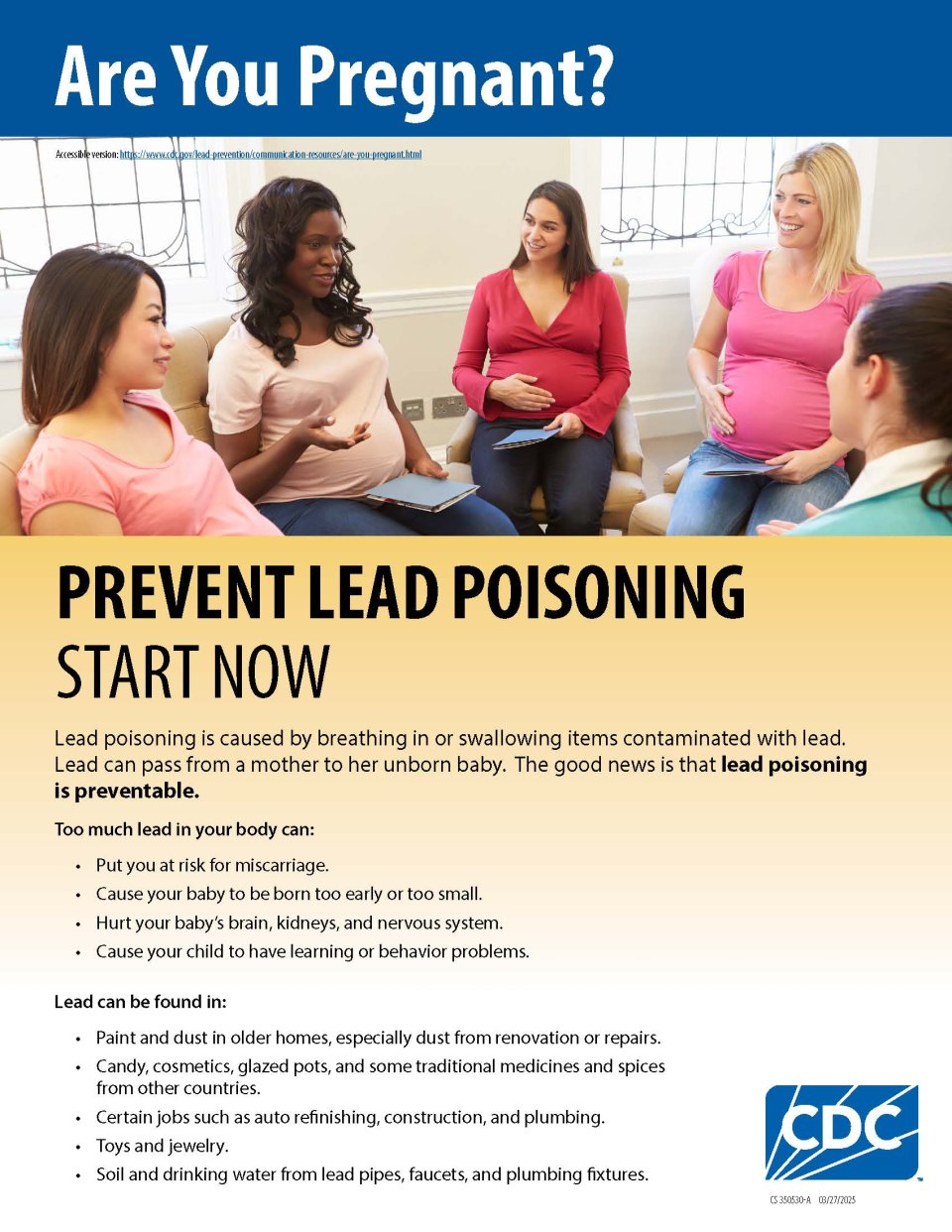
CDC: Are You Pregnant or Planning to Be? Prevent Lead Poisoning
Lead poisoning is caused by breathing in or swallowing items contaminated with lead. Lead can pass from a mother to her unborn baby. The good news is that lead poisoning is preventable. Learn about the dangers of lead and lead poisoning for pregnant women in Are You Pregnant or Planning to Be? Prevent Lead Poisoning (en español).

CDC: Communications Resources & Tools
The webpage – Communications Resources & Tools (en español) – links to free communication tools and resources for childhood lead poisoning prevention, including fact sheets, infographics, social media images, videos and more.

American Academy of Pediatrics: Lead Exposure and Lead Poisoning Information
Protecting children from exposure to lead is important to lifelong good health. Even low levels of lead in blood have been shown to affect IQ, ability to pay attention, and academic achievement. Find information about lead exposure and lead poisoning.
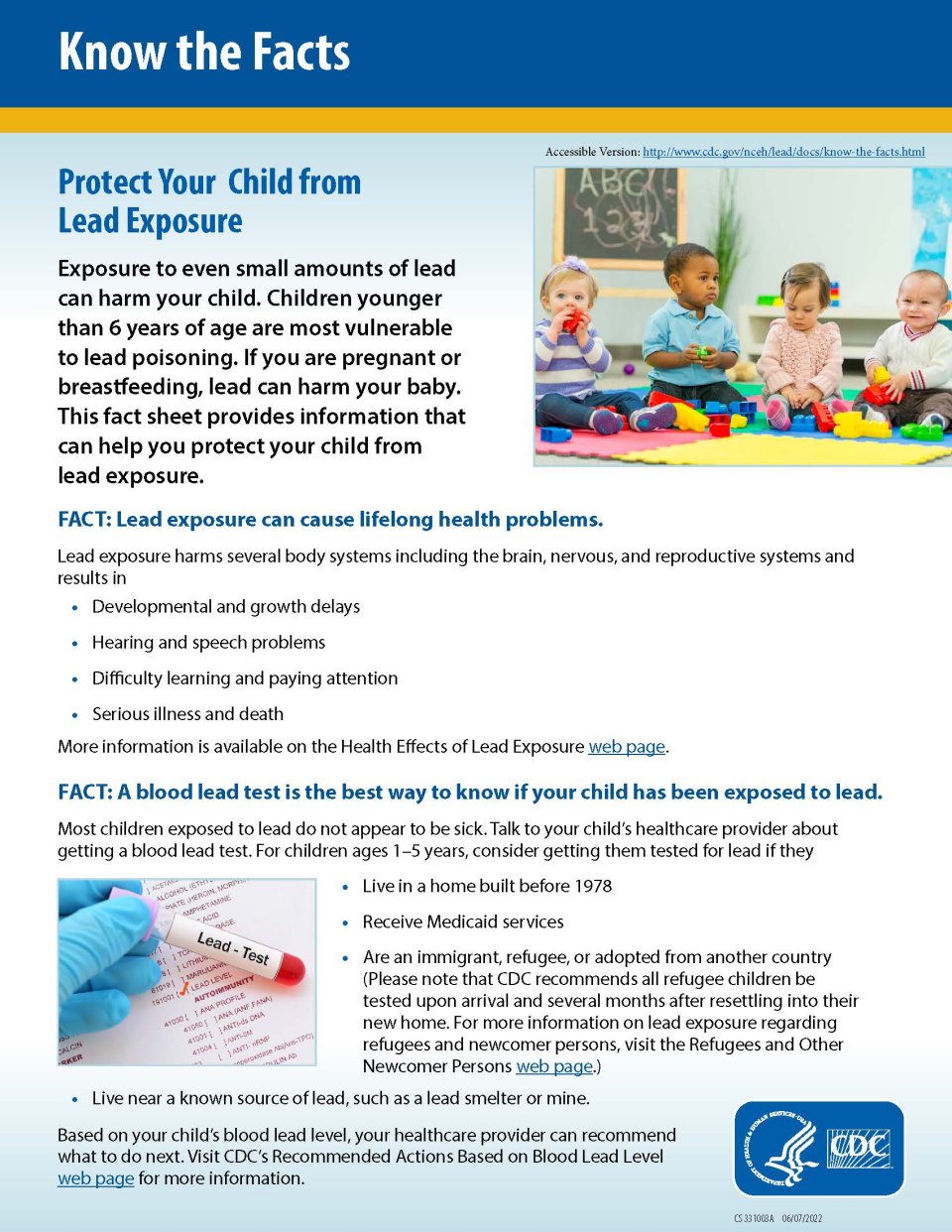
CDC: Know the Facts: Protect Your Child from Lead Exposure
Exposure to even small amounts of lead can harm your child. Children younger than 6 years of age are most vulnerable to lead poisoning. If you are pregnant or breastfeeding, lead can harm your baby. Download the fact sheet – Know the Facts: Protect Your Child from Lead Exposure – which provides information that can help protect children from lead exposure.

Lead Awareness in Indian Country: Keeping our Children Healthy!
Lead Awareness in Indian Country: Keeping our Children Healthy! is a robust set of educational tools that provide practical, on-the-ground, community-based resources to reduce childhood lead exposure in communities. It is built for community leaders to help protect children from potential lead exposure and lead poisoning (en español).

EPA: Lead Poisoning and Your Children
Lead Poisoning and Your Children is a pamphlet with information for parents on protecting children from lead poisoning and reducing lead exposures that unfolds into a poster summarizing seven basic steps for parents. It is also available in Arabic, Chinese Simplified, Chinese Traditional, Dari, French, Korean, Pashto, Portuguese, Russian, Spanish, Tagalog and Vietnamese.
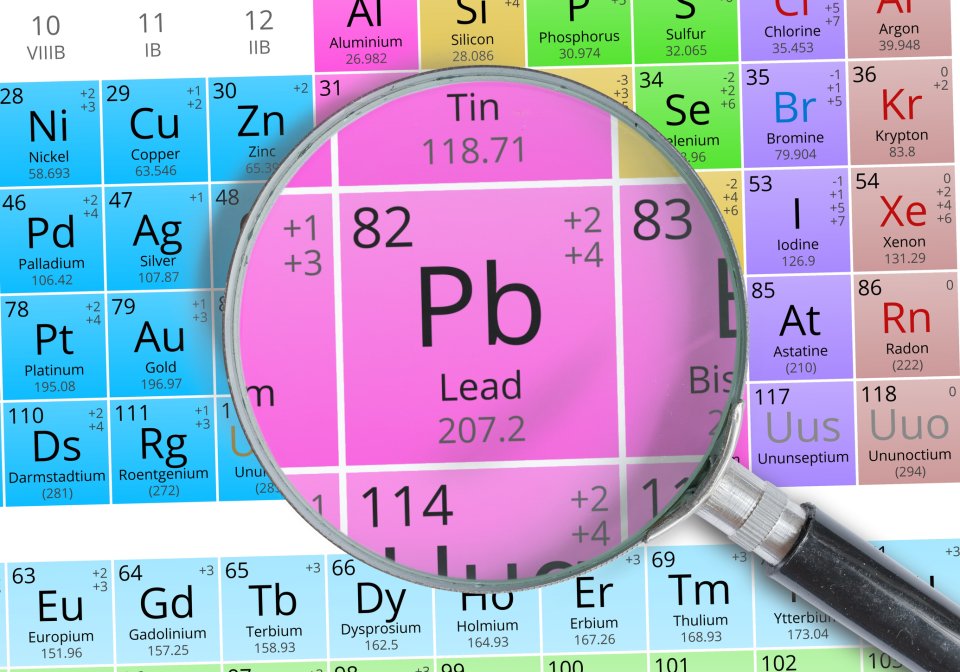
EPA: Lead (Pb) Research
Even though lead (Pb) exposures have dramatically declined in recent decades, they still pose serious risks to public health. EPA Lead (Pb) Research helps you understand more about lead research and risk related to air, drinking water, land and children’s health.

CDC: Division of Nutrition, Physical Activity, and Obesity (DNPAO) State, Tribal and Local Programs
Learn how CDC-supported state and local health programs advance childhood lead poisoning prevention goals by strengthening local blood lead testing and reporting, surveillance, linking children to recommended follow-up services, and targeted population-based interventions. Prompt your thinking about ideas ahead based on success stories from across the United States about these departments’ lead poisoning prevention achievements.
Cultural Products
EPA: Heavy Metals in Cultural Products
Heavy Metals in Cultural Products is a web-based tool that provides educational and outreach materials highlighting the risks from heavy metal exposure, primarily to children and pregnant women from a variety of cultural and religious products such as cosmetics, spices, food, cookware and traditional medicines.
Homes

EPA: Protect Your Family from Lead in Your Home
Known information about lead-based paint must be disclosed before renting or buying a home built before 1978. The "Protect Your Family from Lead in Your Home" pamphlet is available in multiple languages. The Protect Your Family from Lead in Your Home pamphlet is available in multiple languages.

EPA: Lead-Safe Renovations for DIYers
Any renovation, repair or painting (RRP) project in a pre-1978 home that has lead-based paint can easily create dangerous lead dust. Lead-Safe Renovations for DIYers is available in multiple languages and outlines DIY lead-safe work practices to prevent dangerous lead dust from spreading through your home.
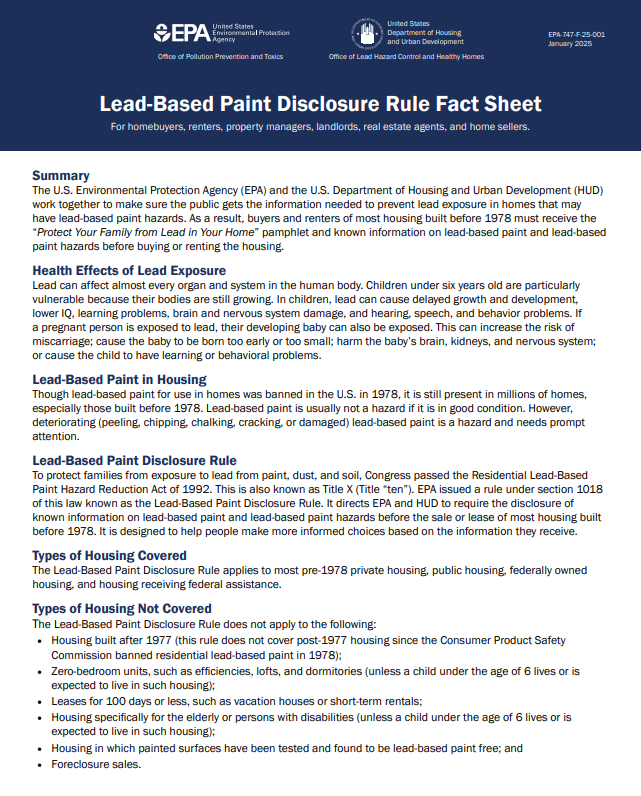
EPA: Lead Disclosure Rule Fact Sheet
EPA and HUD work together to make sure the public gets the information needed to prevent lead exposure in homes that may have lead-based paint hazards. As a result, buyers and renters of most housing built before 1978 must receive the Protect Your Family from Lead in Your Home pamphlet and known information on lead-based paint and lead-based paint hazards before buying or renting the housing.
The Lead Disclosure Rule Fact Sheet is available in multiple languages and outlines disclosure requirements for homebuyers, renters, property managers, landlords, real estate agents and home sellers.
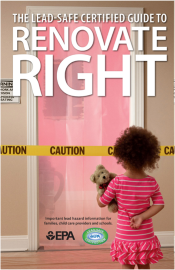
EPA: Lead-Safe Certified Guide to Renovate Right
Lead-Safe Certified Guide to Renovate Right: Important Lead Hazard Information for Families, Child Care Providers, and Schools is a document required to be provided to homeowners by contractors before pre-1978 homes and child-occupied facilities are renovated.
Water
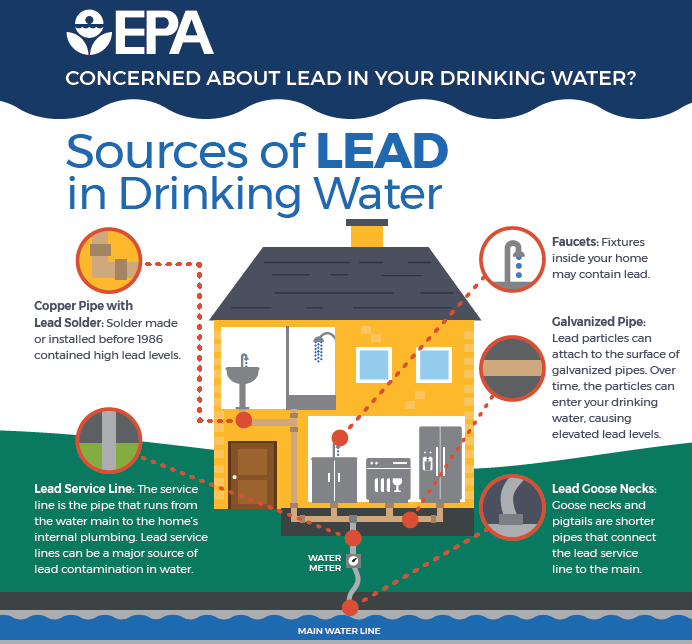
EPA: Lead in Drinking Water Infographic
Use the Lead in Drinking Water infographic to learn basic information about sources of lead in drinking water, suggestions for reducing exposure and information about replacing lead service lines.
EPA: Ground Water and Drinking Water
Use EPA’s Ground Water and Drinking Water website to find technical and regulatory information on safe drinking water standards.
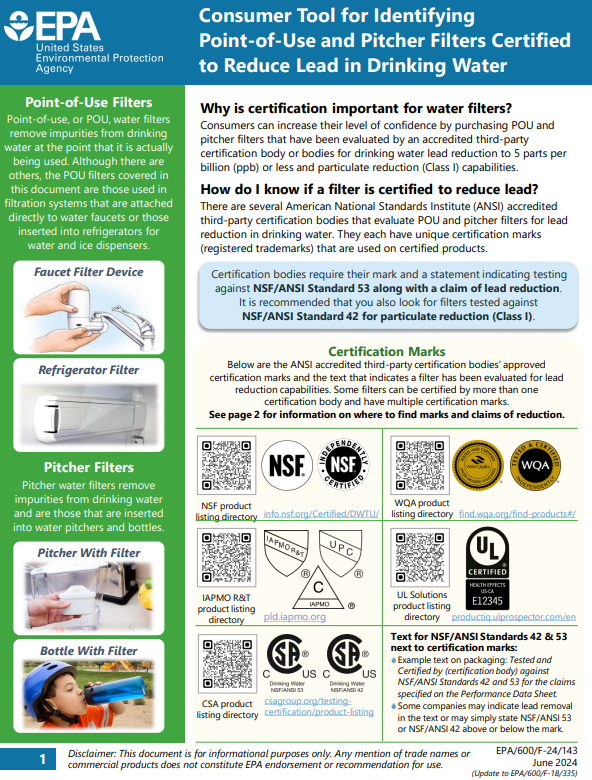
EPA: Consumer Tool for Identifying Point-of-Use and Pitcher Filters Certified to Reduce Lead in Drinking Water
The Consumer Tool for Identifying Point-of-Use and Pitcher Filters Certified to Reduce Lead in Drinking Water helps consumers consider using a drinking water filter that has been evaluated by an accredited third-party certification body to reduce lead.
Soil
Agency for Toxic Substances and Disease Registry: soilSHOP (Soil Screening, Health and Outreach Partnership)
soilSHOP events bring same day soil screening to community members. At soilSHOP, participants bring soil gathered from their gardens or outdoor play area(s) and screen it for contaminants, including lead. Through soilSHOPs, ATSDR and partner organizations inform community members about lead soil contamination and share tips for reducing potential exposures.
Workplace
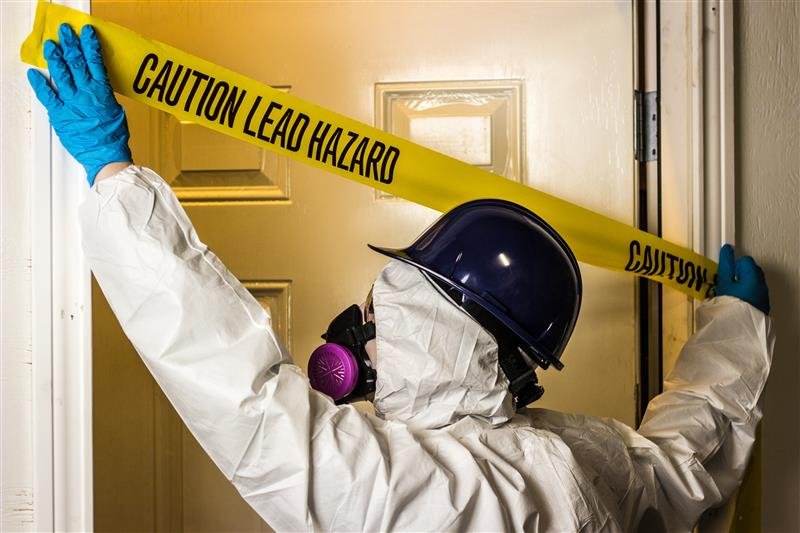
CDC-NIOSH: Lead in the Workplace
Lead exposure is most likely among workers in construction, mining and manufacturing. Lead brought home on your clothes and other items can harm your family, especially pregnant women and children.
If you work near lead-containing products or materials, you may not know you are being exposed. Find information about lead in the workplace.
Community
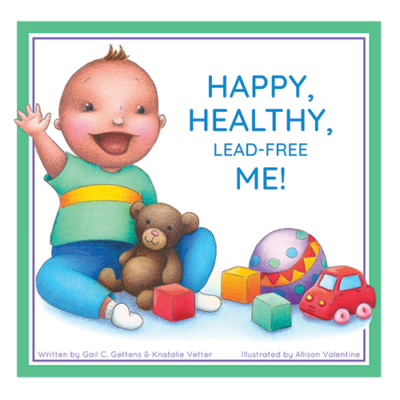
New Hampshire Department of Health: Happy, Healthy Lead-Free Me
Happy, Healthy Lead-Free Me is a children’s book developed by the New Hampshire Department of Health and Human Services aimed at engaging children and educating parents on lead poisoning prevention and the importance of pediatric lead level testing.
The book is also available in Nepali, Spanish, Dari, Portuguese, Swahili, Chuukese, Somali and Haitian Creole.
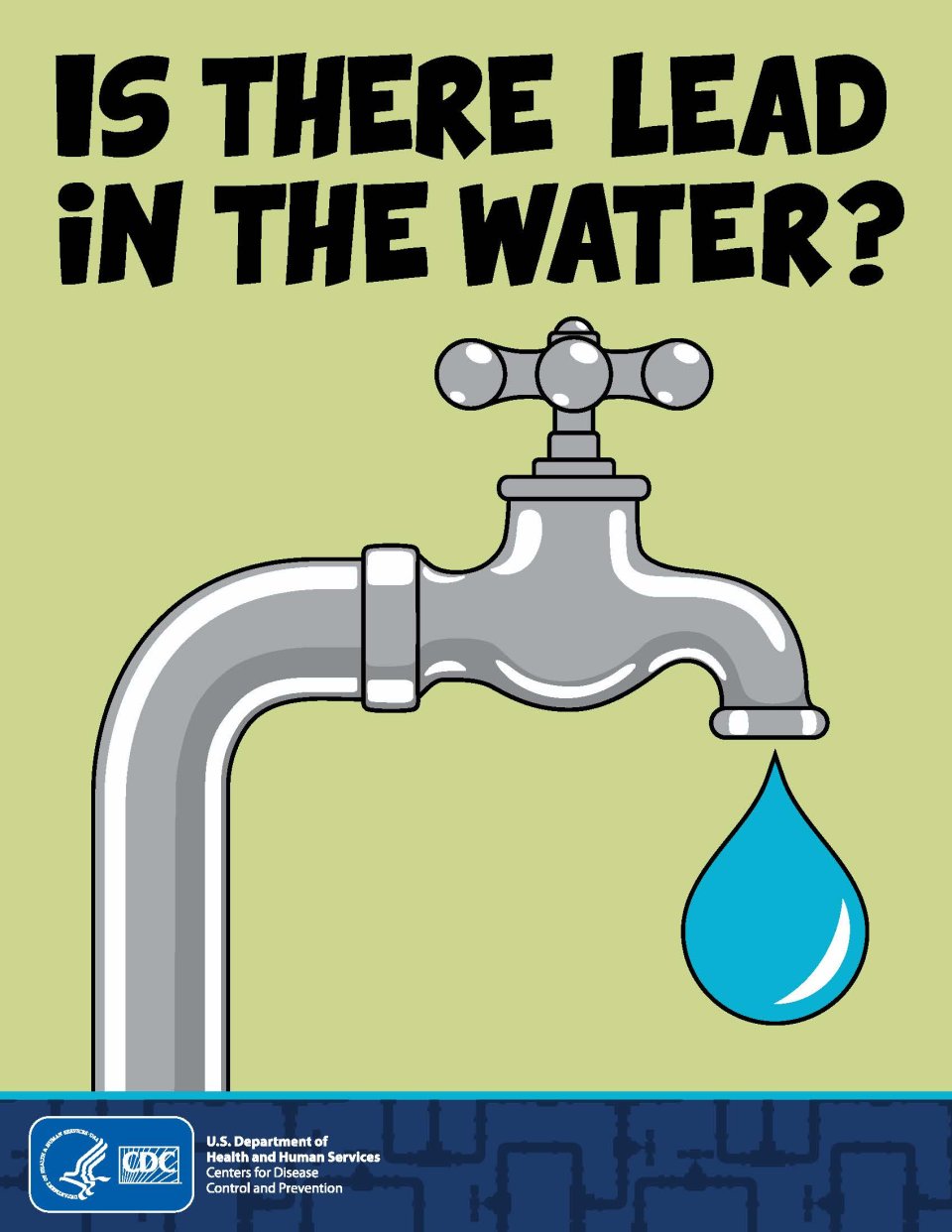
CDC: Is There Lead in the Water?
CDC created the Is There Lead in the Water? activity book to offer parents an interactive way to talk to their kids about lead in water. It is important to note that lead can also be found in paint, dirt and dust. This activity book is recommended for children from 2-8 years old.
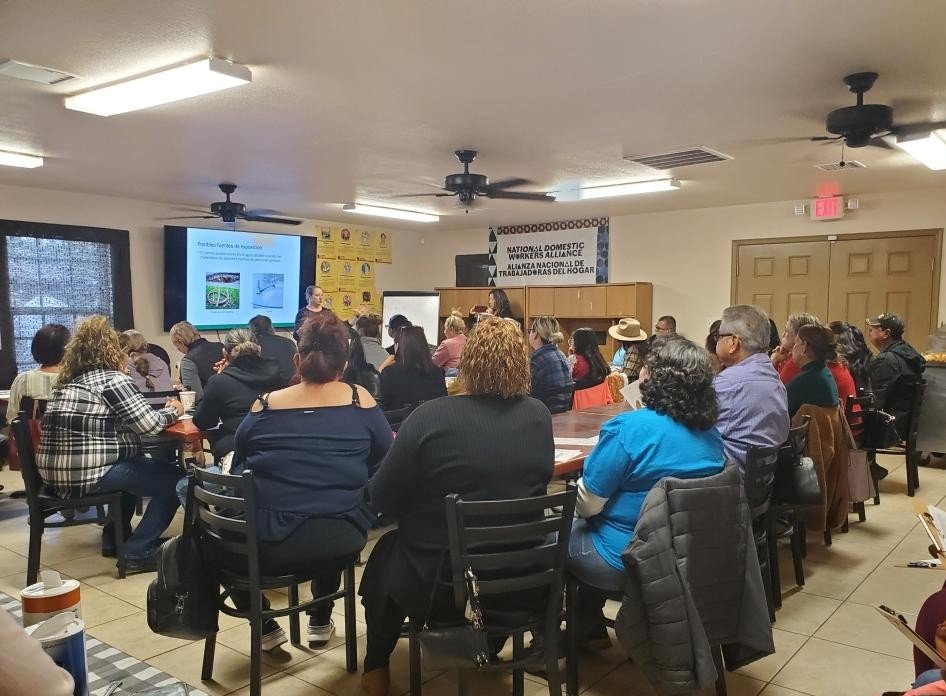
CDC: Community Education Videos
Lead exposure is a major health problem. CDC recorded videos that provide a brief overview of what lead is, where it is found and why it is important to protect young children from exposure for both high schoolers and the general public. Knowledge and awareness about lead as a public health concern is essential to prevention.
Videos
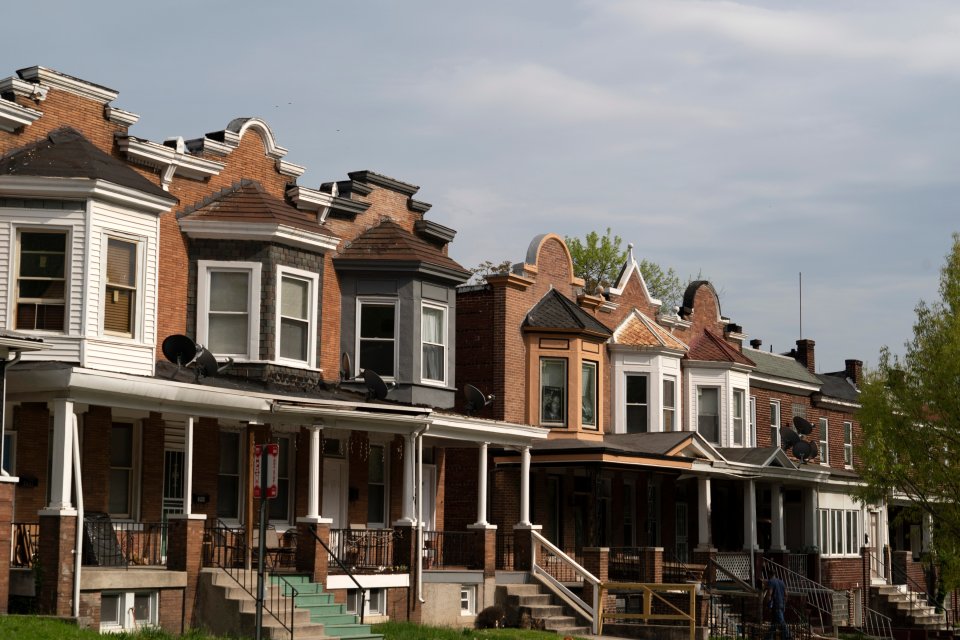
HUD: Healthy Homes Video Playlist
The Healthy Homes Video Playlist on YouTube highlights best practices on lead, asthma, restoring your home and addressing mold after a natural disaster, returning to a flood damaged home, renovations, repairs and more.
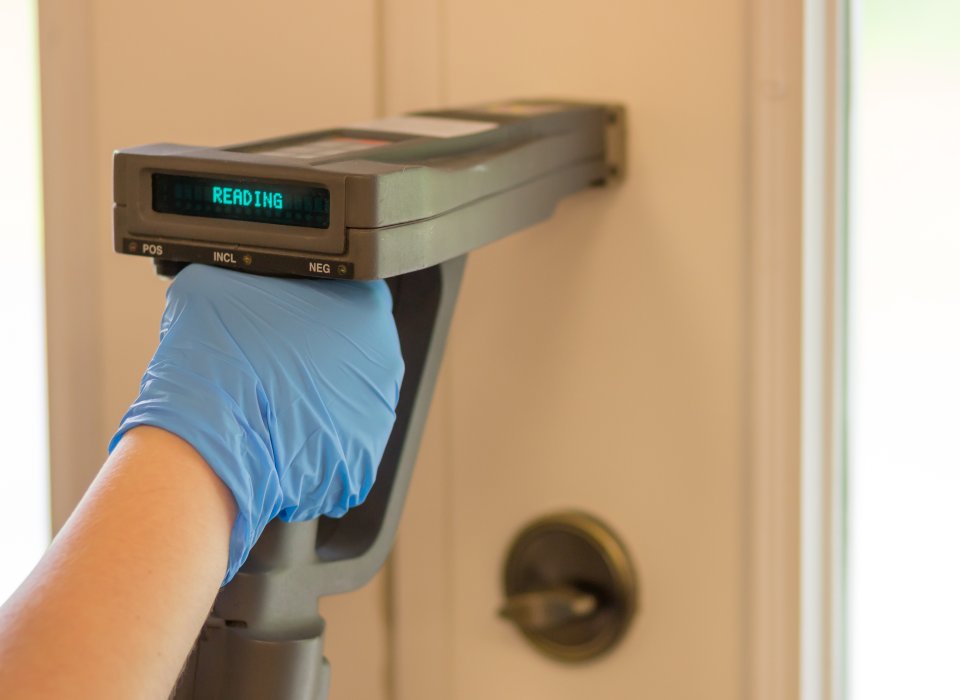
HUD: Evaluating Lead-Based Paint in HUD-Assisted Housing Videos
The Evaluating Lead-Based Paint in HUD-Assisted Housing Videos cover the highlights of completing key lead-based paint evaluations to meet compliance with HUD’s Lead Safe Housing Rule for pre-1978 HUD-assisted housing. The videos include expertise from HUD and certified lead risk assessors/inspectors. Topics include lead-based paint inspection, risk assessment, clearance examination, family interview for environmental investigations of elevated blood lead level cases, and reports.
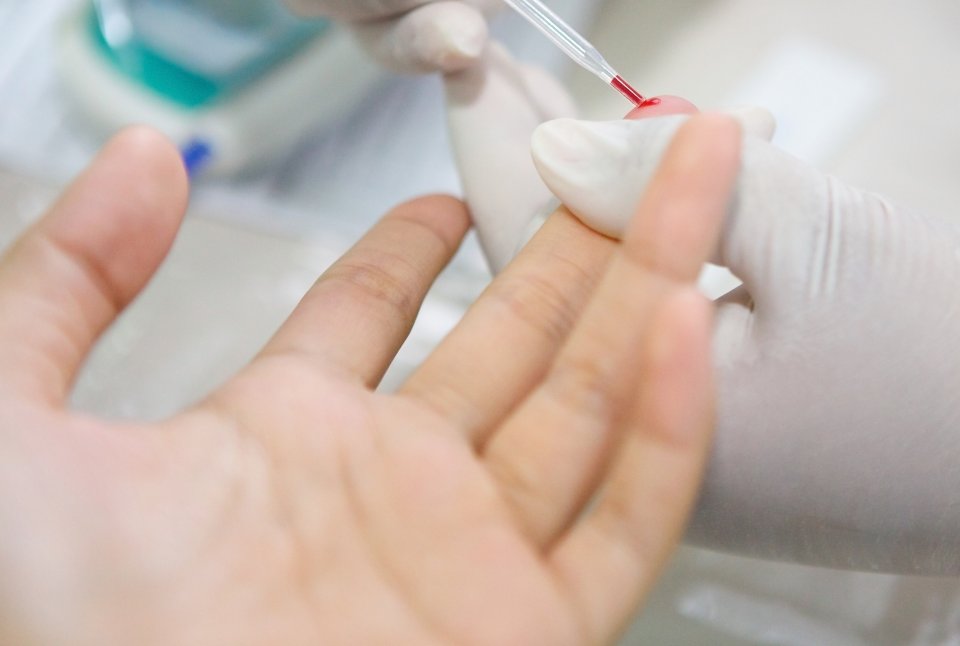
Mission Unleaded: How to Test Children for Lead with Maximum Accuracy
Because lead is present in many places, it is easy to contaminate blood samples during the collection process, which can cause inaccurate lab results. In Mission Unleaded: How to Test Children for Lead with Maximum Accuracy, you will learn how to reduce the risk of contamination and support achievement of accurate blood lead results for patients and their healthcare providers.
Grant Opportunities
HUD’s Office of Lead Hazard Control and Healthy Homes has grant opportunities to reduce the risk of lead exposure for residents, particularly children, by addressing lead hazards in pre-1978 homes of families of limited means.
- The Lead Hazard Reduction Grant Program funds states, Tribes and local governments to conduct lead inspections and risk assessments of homes to identify lead and other home health hazards, the removal of those hazards and outreach to raise awareness about the dangers of lead exposure and training for workers to remove the hazards properly.
- See a list of current Office of Lead Hazard Control and Healthy Homes grantees.