


Children's Health Month
Información disponible en español.
October is National Children’s Health Month! Children are often more vulnerable to pollutants than adults due to differences in behavior and biology, and these differences can lead to greater exposure or unique windows of susceptibility.
The theme for 2026 — Raising the Bar for Children’s Environmental Health — puts the spotlight on the steps that help set kids up for a healthier future, focusing on three key actions.

Raise Awareness: Know the environmental risks that can affect children’s health.
Understand how exposures like air pollution, lead, mold, chemicals, and unsafe water can impact children’s growth, learning, and overall well-being.
Act Early: Reduce environmental hazards in the places children live, learn, and play.
Identify and address environmental risks in homes, schools, child care settings, and playgrounds to create safer, healthier spaces for children.

Protect and Prevent: Support healthy environments for every child, every day.
Use proven steps — like proper ventilation, safe cleaning practices, and access to clean water and healthy housing — to help prevent harmful exposures and promote lifelong health.
Spread the Word
Children's Health Outreach Toolkit
The Children's Health Outreach Toolkit is a starting point to tailor evergreen messages to share across channels during October for Children’s Health Month. Use this messaging to help spread information and resources about children's environmental health and adapt content with local data, programming, languages, and branding.
The messages can be used in the development of a variety of materials, including social media posts, website copy and blogs, newsletters and email campaigns, talking points and speeches, presentations, fact sheets, flyers and posters.
Find the Children's Health Outreach Toolkit
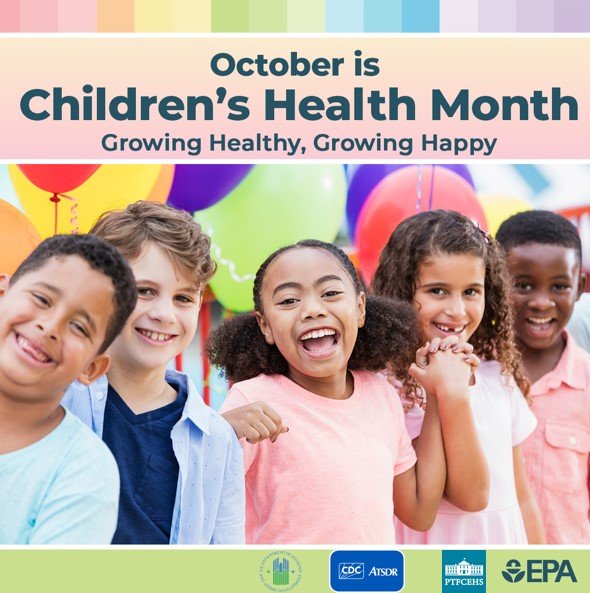
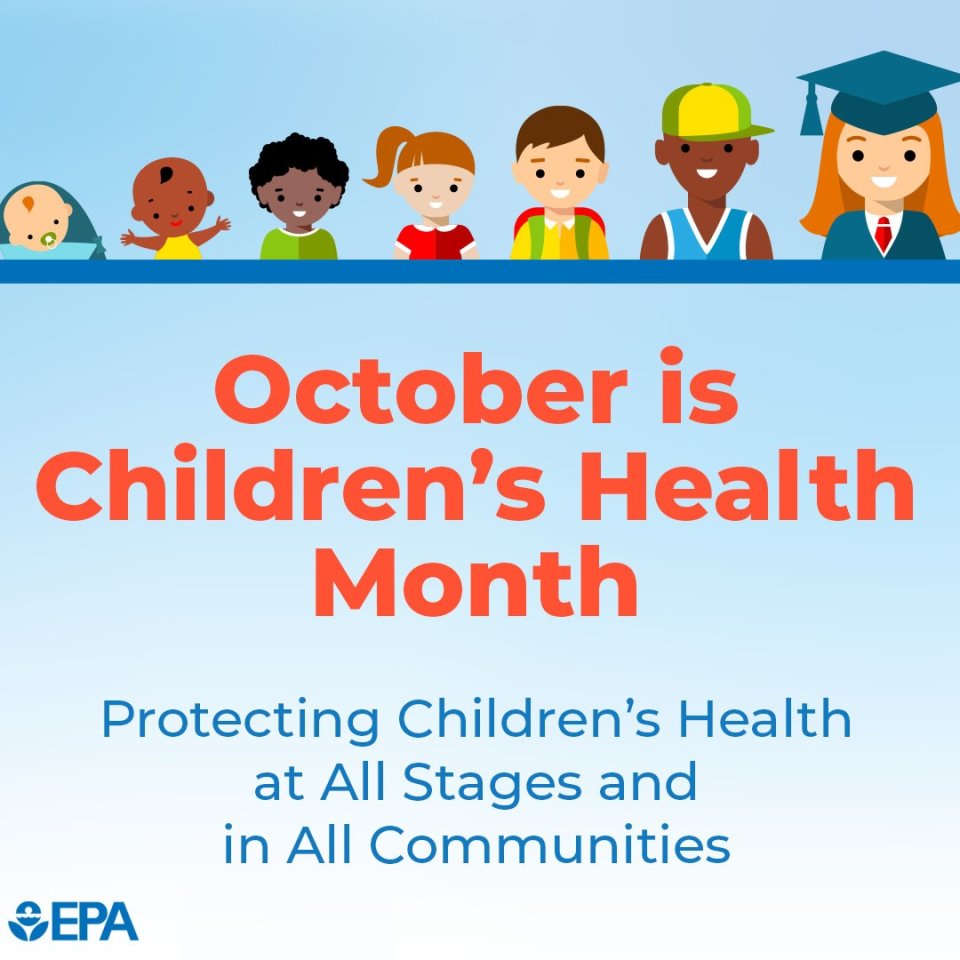
Social Media & Infographics
When posting on social media, tag @EPA to stay connected and incorporate hashtags, including #ChildrensHealthMonth, #ChildHealth and #ProtectKidsHealth.

Learn About Children’s Environmental Health
Related Children's Health Campaigns

Participate in other children’s health campaigns! The following campaigns occur at the same time every year.
Parents & Caregivers
- Children's Environmental Health Facts: Find information about children’s unique vulnerability to environmental hazards and how exposure to pollutants are linked to chronic health conditions such as asthma, childhood cancer, and neurodevelopmental disorders.
- What You Can Do to Protect Children: Find practical tips and guidance on preventing environmental exposures and staying safe from hazards such as carbon monoxide, chemicals, lead, mercury, noise, radon, storms and floods, sun, poor air quality, heat, ticks, and mosquitoes.
- Environmental Health Topics for Parents: Find information for parents sorted by environmental health issues of concern.
School Administrators & Teachers
In addition to using the tips above for parents, EPA has a range of resources specifically for schools and child care providers to make sure schools and classrooms are safe.
- Healthy School Environments: The health of a school's environment can affect the attendance, concentration, performance and health of both students and educators. This website presents information on key topics about establishing and enhancing healthy school environments.
- Healthy Schools Checklist: This 16-page voluntary assessment, adapted from materials in the brochure Sensible Steps to Healthier School Environments, helps with assessing a school's current environmental health, and reduce and prevent exposures to common environmental health hazards.
Healthcare Professionals
- Environmental Health Topics for Child Care Providers: Find major environmental health issues in child care settings and the resources available to address them. It covers common hazards such as asthma triggers, chemical exposures, drinking water contamination, secondhand smoke, green cleaning, indoor air quality, lead, mercury, mold, pests and pesticides, and plastics.
- Training, Webinars and Resources for Child Care Providers: Find trainings and resources hub for improving environmental health in child care and early learning settings. It offers downloadable guides, webinars, checklists, and toolkits on topics such as BPA, integrated pest management, green cleaning, lead, and healthy indoor environments.
- Pediatric Environmental Health Specialty Units (PEHSUs): PEHSUs work collaboratively to improve health systems to make communities safer for children and families. They provide community education and outreach, training for health professionals, and guidance and referrals.