


N-STEPS Online Overview
A Resource for Numeric Nutrient Criteria Development
Overview of Numeric Nutrient Criteria
Nutrient pollution resulting from excess nitrogen (N) and phosphorus (P) is a leading cause of water quality degradation and an environmental challenge facing communities throughout the United States. N and P are essential elements that support the growth of algae and aquatic plants, which provide food and habitat for fish, shellfish, and other organisms that live in water. Excess N and P inputs from human activities, however, can result in eutrophication—stimulating the productivity of plant (e.g., algae and vascular plants) and microbial biomass. Eutrophication leads to depletion of dissolved oxygen, reduced transparency, and changes in biotic community composition through competition (Smith et al. 1999).
In addition to the impacts on aquatic life, excess nutrients also can degrade aesthetics of recreational waters (Smith et al. 1995; Suplee et al. 2009; Sylvan et al. 2007) and increase the incidence of harmful algal blooms, which can endanger human health through the production of toxins that can contaminate recreational and drinking water resources (Anderson et al. 2008; Chorus and Bartram 1999). Figure 1 illustrates the process by which nutrient pollution can affect the uses of a water body.
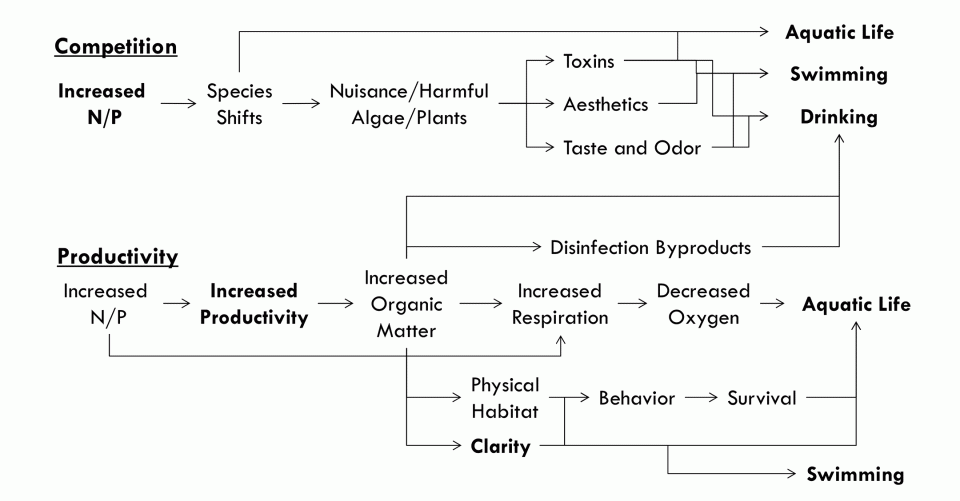
Under the Clean Water Act, states and authorized Tribes are responsible for establishing water quality standards that protect human health and the environment from pollutants such as nutrients. This requires a clear designation of water body uses (e.g., drinking, fishing, swimming) and the development of criteria that can protect and support those uses, along with antidegradation policies and implementation methods, and consideration of downstream waters. Numeric nutrient criteria (NNC) are a critical component of water quality standards and an effective tool for preventing nutrient pollution. Building on efforts to develop narrative criteria that qualitatively describe desired water quality conditions, numeric criteria quantify that ideal and provide distinct interpretations of acceptable and unacceptable conditions. These criteria form the foundation of an effective monitoring program, reducing management decision ambiguity, and providing stakeholders with an informed perspective on the condition of state and Tribal waters. NNC also support the formulation of National Pollution Discharge Elimination System (NPDES) permits and simplify the development of total maximum daily loads (TMDLs) necessary to restore impaired waters.
Overview of Framework
The EPA applies a risk assessment framework to the development of NNC that is conceptually similar to frameworks previously developed for ecological and human health risk assessments (USEPA 1998; NRC 1983). The framework is designed to evaluate the risk of adverse effects on human and ecological health from nutrient pollution, provide an efficient process for developing criteria, and allow for easy iteration as states continue to revisit and update criteria based on changing needs and scientific advancement. The framework consists of four phases:
Planning
NNC development requires that scientific data be transformed into meaningful information about the risk of anthropogenic nutrient pollution to aquatic systems and the ecosystem services they provide. This process begins with planning and research. Here, science and policy experts are convened to make decisions on the purpose and scope of the criteria. They also gather information on sources, effects, and water body characteristics. The primary outcome of the planning process is one or more well-defined management goals.
Problem Formulation
During problem formulation, stakeholders evaluate the linkage between nutrients and management goals. They articulate and refine the purpose for criteria development and determine a plan for analyzing and characterizing effects of the criteria. Initial work in problem formulation includes integrating available information on sources, stressors, effects, and ecosystem and receptor characteristics. From this effort, two products are generated: Assessment Endpoints and a Conceptual Model.
Analysis
The analysis phase of the process involves developing an understanding of spatial and temporal profiles of nutrient exposure and its effects. Selecting the most appropriate method for of data analysis is critical to deriving scientifically defensible and effective criteria. Therefore, it is important to reevaluate decisions that have informed conceptual linkages between nutrients, assessment endpoints, and management goals before selecting an analytical approach. This section discusses key factors to consider in selecting an analytical approach. It also provides detailed instructions on applying three empirical approaches to deriving numeric criteria: Reference condition, Stressor-response, and Mechanistic modeling.
Criteria Derivation
The criteria derivation phase involves interpreting analytical results and considering multiple lines of evidence, if applicable, to calculate criteria that can ensure protection and support of designated uses. Criteria should include a duration and frequency component, and demonstrate protection of downstream waters.