U.S. flag

An official website of the United States government

Here’s how you know

Dot gov

Official websites use .gov
A .gov website belongs to an official government organization in the United States.

HTTPS

Secure .gov websites use HTTPS
A lock (LockA locked padlock) or https:// means you’ve safely connected to the .gov website. Share sensitive information only on official, secure websites.

    • Environmental Topics
    • Air
    • Bed Bugs
    • Chemicals, Toxics, and Pesticide
    • Emergency Response
    • Environmental Information by Location
    • Health
    • Land, Waste, and Cleanup
    • Lead
    • Mold
    • Radon
    • Research
    • Science Topics
    • Water Topics
    • A-Z Topic Index
    • Laws & Regulations
    • By Business Sector
    • By Topic
    • Compliance
    • Enforcement
    • Guidance
    • Laws and Executive Orders
    • Regulations
    • Report a Violation
    • Environmental Violations
    • Fraud, Waste or Abuse
    • About EPA
    • Our Mission and What We Do
    • Headquarters Offices
    • Regional Offices
    • Labs and Research Centers
    • Planning, Budget, and Results
    • Organization Chart
    • EPA History

Breadcrumb

  1. Home
  2. RadTown
  3. Neighborhood
  4. House

Non-Ionizing Radiation Used in Microwave Ovens
Radiation Facts
  • Microwave ovens use a form of electromagnetic radiation called microwaves.
  • Microwaves do not make food radioactive.

Microwave ovens use electromagnetic waves called microwaves that penetrate food, causing molecules in the food to vibrate and generate heat that cooks the food. Learn more about the electromagnetic spectrum.

On this page:
  • About Non-Ionizing Radiation Used in Microwave Ovens
  • What You Can Do
  • Where to Learn More

About Non-Ionizing Radiation Used in Microwave Ovens

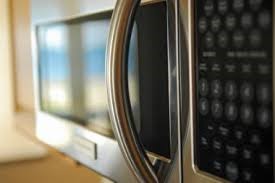
Image of a microwave.

Microwave ovens use radiation on the electromagnetic spectrumEnergy that travels in the form of waves or high-speed particles. The electromagnetic spectrum extends from low to high frequencies of energy including radio waves, microwaves, infrared light, visible light, ultraviolet light, x-rays and gamma rays. The electromagnetic spectrum is divided into two major categories: ionizing radiation and non-ionizing radiation. to heat food. The non-ionizing radiationRadiation that has lower energy levels and longer wavelengths than ionizing radiation. It has enough energy to move atoms, but not enough to alter them chemically. It can be strong enough to heat tissue and cause harmful biological effects. Examples include radio waves, microwaves, visible light and infrared from a heat lamp. used by a microwave oven does not make the food radioactive. Microwaves are only produced when the oven is operating. The microwaves produced inside the oven are absorbed by food and produce the heat that cooks the food. Microwave ovens are constructed to ensure the electromagnetic radiation does not leave the oven. This includes safety interlocks which ensure that the oven turns off anytime the door is opened. Most injuries from microwave ovens are the result of heat related burns from overheated food or liquids.

If microwave ovens are used while the door is broken or altered, it is possible for them to leak microwaves. Exposure to high levels of microwaves can cause painful burns. Microwave radiation leaks are hard to detect because you can't smell or see microwaves. The U.S. Food and Drug Administration (FDA), which regulates radiation-emitting products such as microwave ovens, advises against standing directly up against the oven while it is operating. This will avoid harm from any possible leaks.

What You Can Do

  • Follow the manufacturer's instructions. Products will contain a safety manual and safety precautions specific to your microwave oven model.
  • Never operate if the door appears dented or broken. Don’t use a microwave oven if you can't shut the oven door or it doesn't seal well.
  • Take precautions. As an added safety precaution, don't stand directly against a microwave oven while it is operating.

Where to Learn More

U.S. Food and Drug Administration (FDA)

FDA's Center for Devices and Radiological Health (CDRH) sets and enforces standards of performance for electronic products that emit radiation. Microwave ovens must be designed to meet the safety standards established by FDA.

FDA establishes performance standards for microwave ovens. All microwave ovens must have a label stating that they meet these performance standards. FDA requires that all ovens have a label that explains how to use them safely.

Microwave Ovens 
This webpage provides an overview of how microwave ovens work and how to use them safely.

Performance Standards for Microwave and Radio Frequency Emitting Products
The Code of Federal Regulations specifies the standards for microwave emitting devices, including microwave ovens.

World Health Organization (WHO)

WHO provides information about a variety of health topics, including electromagnetic fields.

Radiation: Electromagnetic Fields
This webpage provides health and safety information for consumers regarding electromagnetic radiation, including from microwave ovens.

RadTown

  • Neighborhood
    • School
      • Radioactive Material in Science Classrooms
      • Tritium in Exit Signs
    • House
      • Americium in Ionization Smoke Detectors
      • Microwave Ovens
      • Natural Radionuclides in Private Wells
      • Natural Radionuclides in Public Drinking Water
      • Radon in Homes, Schools and Buildings
    • Radiation in Medicine
      • Medical X-rays
      • Nuclear Medicine
      • Radiation Therapy
    • Electric and Magnetic Radiation
      • Electric and Magnetic Fields from Power Lines
      • Non-Ionizing Radiation From Wireless Technology
  • Outdoors
    • The Park
      • Background Radiation
      • Cosmic Radiation
      • Radiation from Solar Activity
      • Ultraviolet (UV) Radiation and Sun Exposure
    • Mines
      • Radioactive Material from Fertilizer Production
      • Uranium Mining and Milling
    • Construction Sites
      • Industrial Radiography
      • Natural Radioactivity in Building Materials
      • Nuclear Gauges
    • Waste Sites
      • Radioactive Material in Scrap Metal
      • Radioactive Waste
  • Waterfront
    • Power Generation
      • Nuclear Power Plants
      • Radiation Wastes From Coal-fired Power Plants
      • Radioactive Waste Material From Oil and Gas Drilling
    • Military Activities
      • Depleted Uranium
      • Nuclear Submarines and Aircraft Carriers
      • Radioactive Fallout From Nuclear Weapons Testing
    • Transporting Radioactive Material
      • Radiation and Shipping Port Security
      • Transportation of Radioactive Material
    • Cleanup Sites
      • Radioactively Contaminated Sites
  • Downtown
    • Radiation Science
      • Particle Accelerators
      • Radioactive Material Used in Research
    • Consumer Products
      • Mail Irradiation
      • Natural Radioactivity in Food
      • Radioactivity in Antiques
      • Radioactivity in Tobacco
      • Ultraviolet (UV) Tanning Equipment
    • Air Travel
      • Radiation and Airport Security Scanning
    • Emergency Response
      • Careers in Radiation Protection
      • Radiation Emergencies
  • Classroom Materials for Teachers
    • Radiation Protection
      • Teacher Information
      • Vocabulary Activities
      • Activity 1: History of Radiation Protection
      • Activity 2: Time, Distance and Shielding
      • Activity 3: Radiation Warning and Protection Equipment
      • Activity 4: Buildings as Shielding
      • Activity 5: A Career in Radiation Protection
      • Activity 6: Impact of Radiological Emergencies
      • Activity 7: Benefits of Radiation
    • The Radioactive Atom
      • Teacher Information
      • Vocabulary Activities
      • Activity 1: Atomic Discoveries
      • Activity 2: Atomic Math and Shorthand
      • Activity 3: Strong Nuclear Forces
      • Activity 4: Atomic Stability
      • Activity 5: Half-Life
      • Activity 6: Radioactive Decay Chain
    • Radiation Exposure
      • Teacher Information
      • Vocabulary Activities
      • Activity 1: Types of Radiation
      • Activity 2: Sources of Annual Radiation Exposure
      • Activity 3: Penetrating Powers of Ionizing Radiation
      • Activity 4: Exposure Pathways
      • Activity 5: Radiation Health Effects
      • Activity 6: Acute versus Chronic Exposure
    • Radon
      • Teacher Information
      • Vocabulary Activities
      • Activity 1: Ground Up
      • Activity 2: Radon Vacuum
      • Activity 3: Indoor Radon Levels
      • Activity 4: The Half-Life of Radon
    • Uranium
      • Teacher Information
      • Vocabulary Activities
      • Activity 1: Uranium, Radium and Radon
      • Activity 2: Radiation and Uranium Myths and Facts
      • Activity 3: Uranium Ore Sources in the U.S.
      • Activity 4: Uranium Mining Methods
      • Activity 5: Radiation Contamination and Exposure
      • Activity 6: Radiation Cleanup and Advocacy Objectives
  • A to Z Subject Index
  • Women in Radiation History
    • Lise Meitner
    • Chien-Shiung Wu
    • Rosalind Franklin
  • Glossary
Contact Us about RadTown
Contact Us about RadTown to ask a question, provide feedback, or report a problem.
Last updated on June 18, 2026
  • Assistance
  • Spanish
  • Arabic
  • Chinese (simplified)
  • Chinese (traditional)
  • French
  • Haitian Creole
  • Korean
  • Portuguese
  • Russian
  • Tagalog
  • Vietnamese
United States Environmental Protection Agency

Discover.

  • Accessibility Statement
  • Budget & Performance
  • Contracting
  • EPA www Web Snapshot
  • Grants
  • No FEAR Act Data
  • Plain Writing
  • Privacy and Security Notice

Connect.

  • Data
  • Inspector General
  • Jobs
  • Newsroom
  • Regulations.gov
  • Subscribe
  • USA.gov
  • White House

Ask.

  • Contact EPA
  • EPA Disclaimers
  • Hotlines
  • FOIA Requests
  • Frequent Questions
  • Site Feedback

Follow.