


Tribal IAQ Resource Directory: Alaska Resources

Overview
Contacts and Programs in Alaska
 NTAA Alaska Tribal Air Workgroup
Get engaged with other Alaska Tribes working on air issues! Join the National Tribal Air Association’s Alaska Workgroup by sending an email to Miranda O’Neill (miranda.oneill@nau.edu). This group is officially hosted by the National Tribal Air Association (NTAA) and its elected Alaska representatives.
Alaska Housing Finance Corporation Weatherization Assistance Program Learn about resources for weatherization and indoor air quality in homes. Find resources on a range of IAQ topics. Regional Tribal Health OrganizationsRegional Tribal health organizations typically have trained environmental health professionals who can provide assistance on IAQ and healthy homes issues, among other environmental health needs. Reach out to the closest Tribal health organization and ask for the environmental health program/staff.
Alaska Department of Environmental Conservation Air ProgramConnect with air quality staff on outdoor air topics that can impact indoor air - e.g. road dust, solid waste burning, residential woodsmoke and wildfire smoke. Learn about local air quality using the DEC Community Air Quality Monitoring Map. Sign up for Alaska air alert notifications.
Alaska Department of Natural Resources, Alaska Radon Program
Learn about radon in Alaska, view the Alaska Radon Map, and request a free home radon testing kit. Get involved in the annual Alaska Radon Poster Contest. Contact Paul Goodfellow (paul.goodfellow@alaska.gov) for more information.
Zender Environmental Health and Research Group
Find fact sheets on a range of topics, training for quality assurance work, and resources on conducting outreach and education, e.g. social media.
Alaska Native Tribal Health ConsortiumThe Tribal Air Quality program works with Tribal partners to address issues in their homes and communities so everyone can experience healthy air. Get direct technical assistance on air quality issues and healthy homes kits, borrow an air quality sensor, get help with air quality budgets, workplans, and QAPPs, learn about funding to carry out air quality projects in rural communities, and apply for an ANTHC subaward to conduct an air quality project in your community.
Alaska Dept of Health and Social Services, Environmental Public Health Program Contact staff (eph@alaska.gov) who have expertise in Alaska-specific toxicology and environmental health sciences.
 University of Alaska Fairbanks Cooperative Extension Program
Connect with professional educators and experts in radon, healthy homes, and indoor air quality.
Cold Climate Housing Research Center (CCHRC)
Connect with experts in all things building science, sustainability, indoor air, ventilation, filtration, and home heating. CCHRC is often a partner on research or other community building projects and has resources specific to cold climates, including a Healthy Homes Poster that features Alaskan artwork and home design.
Indoor Air Tools Specific to Alaska
 Alaska Native Tribal Health Consortium (ANTHC) Resources
ANTHC has a Community Environment and Health program with newsletter articles, fact sheets, flyers, and youth resources designed for Alaska communities. Their Air and Healthy Homes Program includes community air assessment tools, a Rural Alaska Healthy Homes Checklist for home and school assessments to keep students safe, tip sheets like "How to make your own air cleaner" or "Green Cleaning", and presentations, and much more. Visit the ANTHC Air Quality Visualization Dashboard to view Alaska localized air quality. Contact ANTHC (ceh@anthc.org) for more information.
EPA’s Alaska Tribal Air ToolkitThe Toolkit includes fact sheets and videos with information on rural diesel emissions, indoor air quality, road dust, solid waste burning, and wood smoke.
EPA’s IGAP Workplan TemplatesThe EPA IGAP webpage includes an Air Quality GAP Sample Workplan Template with resources like videos and factsheet with information on rural diesel emissions, indoor air ideas for workplan activities that address air quality, road dust, solid waste burning, wildfire smoke, and woodsmoke issues.
ITEP’s Building Performance: Improving IAQ in Cold Climates TrainingA free cold-climate focused Building Science Training from the Institute for Tribal Environmental Professionals.
Let’s Clear the Air Video Series from Aleknagik Traditional Council and Partners
Aleknagik Traditional Council worked with ANTHC and partners to create these educational videos on topics including:
Wildfires Explorer Tool for Alaska
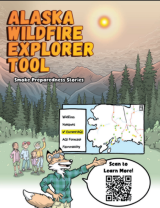
University of Alaska Fairbanks created a wildfires explorer tool for Alaska. Learn about wildfires and air quality information and how to use the tool by watching a video and reading a comic book user guide. Learn how to protect yourself and your family from wildfire smoke.
 Previous: Disaster Response & Recovery