U.S. flag

An official website of the United States government

Here’s how you know

Dot gov

Official websites use .gov
A .gov website belongs to an official government organization in the United States.

HTTPS

Secure .gov websites use HTTPS
A lock (LockA locked padlock) or https:// means you’ve safely connected to the .gov website. Share sensitive information only on official, secure websites.

    • Environmental Topics
    • Air
    • Bed Bugs
    • Chemicals, Toxics, and Pesticide
    • Emergency Response
    • Environmental Information by Location
    • Health
    • Land, Waste, and Cleanup
    • Lead
    • Mold
    • Radon
    • Research
    • Science Topics
    • Water Topics
    • A-Z Topic Index
    • Laws & Regulations
    • By Business Sector
    • By Topic
    • Compliance
    • Enforcement
    • Guidance
    • Laws and Executive Orders
    • Regulations
    • Report a Violation
    • Environmental Violations
    • Fraud, Waste or Abuse
    • About EPA
    • Our Mission and What We Do
    • Headquarters Offices
    • Regional Offices
    • Labs and Research Centers
    • Planning, Budget, and Results
    • Organization Chart
    • EPA History

Breadcrumb

  1. Home
  2. Indoor Air Quality (IAQ)
  3. Tribal Indoor Air Quality Resource Directory

Tribal IAQ Resource Directory: Mold and Moisture

a colorful divider bar

Overview

The key to mold control is moisture control. To prevent mold from growing, it is important to find the water source and fix the problem. Dry the area quickly, within 24-48 hours if possible. Remove bulk water, and use fans and dehumidifiers to speed drying, and/or open doors and windows if outdoor conditions allow. Keep the humidity levels below 60% to prevent the mold from growing. Once the area is dry, it is important to clean and remove the mold. Clean the mold off hard surfaces using a mild detergent and water. It is not recommended to use biocides (e.g. bleach) to remove mold. Absorbent or porous materials, such as ceiling tiles and carpet, may have to be thrown away if they can’t be cleaned and dried. When cleaning mold, it is important to use personal protective equipment including gloves, an N-95 respirator, and goggles.
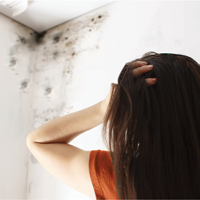
a woman holding the sides of her head in shock as she looks at a large spread of mold on her wall and ceiling

IAQ Tip:

Major mold events, or mold areas larger than 10 square feet may require professional remediation.

First, address moisture problems...

  • Promptly fix the source of any water problems or leaks.
  • Keep indoor humidity low. If possible, maintain indoor humidity below 60% (ideally between 30-50%) relative humidity.

Then, address the mold...

  • Clean mold off of hard surfaces with water and detergent, and dry completely. Items that soaked up water may need to be discarded.

If you are experiencing health symptoms that you think are caused by mold in your home, consult a healthcare professional.

a colorful divider bar

Resources

computer cursor pointing right  Tribal Healthy Homes Network Mold Page
A resource page curated specifically for Tbribal audiences. It features extensive resources for policymakers, community leaders, and the general public, including a webinar on “Mold in Tribal Housing – A Dialogue about Prevention, Funding and Cold Climate Issues.”
computer cursor pointing right  Tribal Mold Webinars
The Institute for Tribal Environmental Professionals presents an in-depth webinar series with the Chocktaw Nation on mold, moisture, and remediation.
computer cursor pointing right  EPA’s Brief Guide to Mold, Moisture, and Your Home
A shareable resource for homeowners and renters on how to clean up mold growth and prevent future mold problems in the home.

Policy Highlight:

Tulalip Tribes Housing Department Mold and Mildew Policy Tribal policy example with tenant obligations and guidelines to prevent and quickly remediate any mold or mildew problems.

computer cursor pointing rightTribal Healthy Homes Network Mold Policy Guide
A resource guide from the Tribal Healthy Homes Network that gives a basis of policy approaches for mold prevention, assessment, and abatement to prevent mold in Tribal buildings.
computer cursor pointing right  EPA’s Mold Page
The hub for all of EPA’s mold and moisture resources.
computer cursor pointing right  EPA’s Mold Remediation in Schools and Commercial Buildings
A detailed resource for leaders and managers of public buildings to help promote and maintain mold-free environments.

computer cursor pointing right  EPA’s Moisture Control Guidance for Building Design, Construction and Maintenance
A detailed resource for anyone who designs, builds, operates or maintains buildings and heating, ventilating and air conditioning (HVAC) equipment. It provides practical guidance on how to control moisture in buildings.

computer cursor pointing right  CDC’s Mold Page
Information on the health effects of mold exposure and how to prevent, safely clean up, and control mold. This webpage also includes a homeowners and renters guide to mold cleanup after disasters. 

Flood Emergencies:

For resources specific to the response, recovery, and mitigation of flood emergencies, see the Disaster Preparedness & Mitigation section and the Disaster Response and Recovery section.


arrow pointing to the left Previous:  Asthma
Next: Radon computer cursor pointing to the right

Indoor Air Quality (IAQ)

  • Learn about Indoor Air Quality
  • IAQ by Building Type
  • Indoor Air Pollutants and Sources
  • IAQ Science and Technologies
  • Networking and Funding
  • Webinars, Meetings and Resources
  • IAQ Trending Topics
  • IAQ Frequently Asked Questions
  • Publications about IAQ
  • Regional and State IAQ Information
  • Tribal Indoor Air Quality Resource Directory
    • Healthy Homes, Schools, and Buildings
    • Asthma
    • Mold and Moisture
    • Radon
    • Commercial Tobacco and Secondhand Smoke
    • Home Heating, Cooking and Energy
    • Disaster Preparedness & Mitigation
    • Disaster Response & Recovery
    • Alaska Resources
    • Funding
    • Helpful IAQ Contacts
Contact Us about Indoor Air Quality
Contact Us about Indoor Air Quality to ask a question, provide feedback, or report a problem.
Last updated on April 30, 2026
  • Assistance
  • Spanish
  • Arabic
  • Chinese (simplified)
  • Chinese (traditional)
  • French
  • Haitian Creole
  • Korean
  • Portuguese
  • Russian
  • Tagalog
  • Vietnamese
United States Environmental Protection Agency

Discover.

  • Accessibility Statement
  • Budget & Performance
  • Contracting
  • EPA www Web Snapshot
  • Grants
  • No FEAR Act Data
  • Plain Writing
  • Privacy and Security Notice

Connect.

  • Data
  • Inspector General
  • Jobs
  • Newsroom
  • Regulations.gov
  • Subscribe
  • USA.gov
  • White House

Ask.

  • Contact EPA
  • EPA Disclaimers
  • Hotlines
  • FOIA Requests
  • Frequent Questions
  • Site Feedback

Follow.