


Tribal IAQ Resource Directory: Healthy Homes, Schools, and Buildings

Overview
People spend the majority of their time inside buildings. Other sections in this document highlight specific indoor air quality concerns such as mold and radon, and list resources where the reader can learn more about those particular topics. This section addresses healthy buildings more holistically. The resources listed here help the reader learn how to comprehensively create and maintain healthy indoor environments. There is a little information about a lot of different topics. These topics include ventilation, source control, filtration, vapor intrusion, pesticides, volatile organic compounds, mold, tobacco smoke, radon, drinking water contaminants and green cleaning, among others.

Healthy Homes Resources
 Tribal Healthy Homes Calendar Checklist
Although this was originally designed for 2017-2018, this Tribal resource presents an organized checklist of action items that homeowners and renters can complete on an annual basis to ensure a safe and healthy home.
Green and Healthy Homes Virtual Assessment ToolkitA toolkit of free documents to support virtual healthy homes assessments, including intake forms, assessment documents, and guidance resources. More home assessment resources can be found in the asthma section.
EPA’s IAQ Demo HouseOutlines some of the most important ways to protect the air in your home by touring the virtual IAQ House. Room-by-room, you’ll learn about the key pollutants and how to address them.
EPA Information on Volatile Organic CompoundsEPA’s website on volatile organic compounds’ (VOCs) impact on indoor air quality describes sources of VOCs, health effects, and steps to reduce exposure.
EPA’s Air Cleaners and Air Filters in the Home
Includes a consumer’s guide and a technical guide to ventilation systems and air filtration in the home.
EPA’s Biological Contaminants and IAQ
This page describes the different types of biological contaminants commonly found indoors, how they affect our health and buildings and how to reduce exposure to them.
Little Traverse Bay Bands of Odawa Indians Air Quality ProgramThis website hosts educational and outreach materials related to indoor air quality, including a self-guided indoor air quality checklist and infographics on wildland fires and asthma.
Healthy Homes Resource GuideAn interactive guide from Tribal Healthy Homes Network that provides examples of free healthy home resources, many of which are customized materials specifically for Tribes.
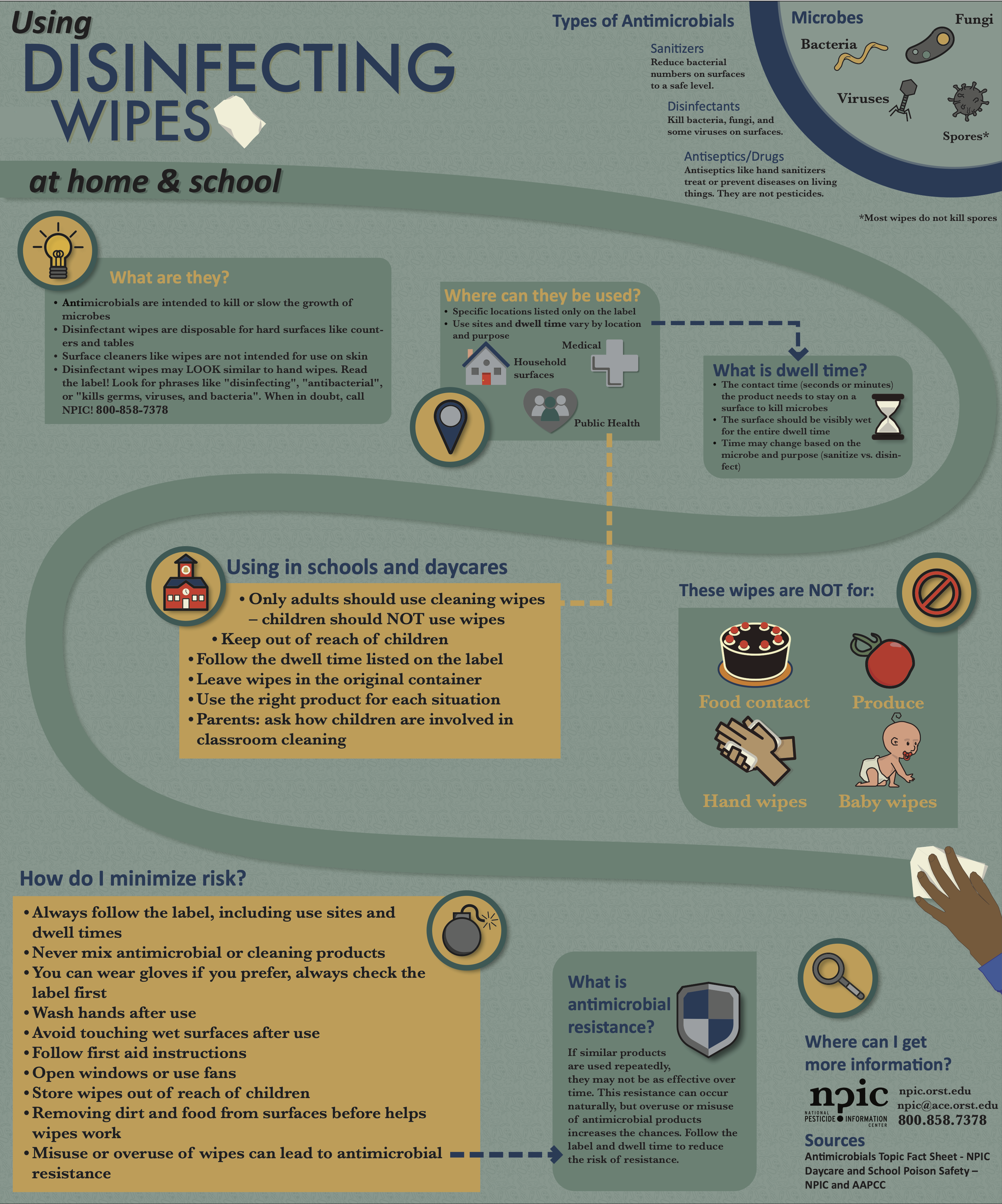
National Pesticide Information Center Infographic
An infographic describing how to properly use disinfecting wipes at home and in schools.
StopPests.org
Contains training materials and webinars for Integrated Pest Management (IPM) in homes and public housing. IPM focuses on pest prevention and least-toxic control methods, making IPM a cost-effective, practical approach to pest management.
Air Cleaner Information for Consumers
A resource from California Air Resource Board to help consumers identify safe and effective air cleaners.
EPA’s Abandoned Mobile Home Toolkit
Abandoned mobile homes create numerous safety, economic and environmental concerns. This toolkit provides case studies and a step-by-step guide outlining how to deconstruct a mobile home.
ELI report: Reducing Exposure to Cooking Pollutants
A report from the Environmental Law Institute about the benefits of ventilation while cooking.
Schools and Buildings Resources
EPA IAQ Tools for SchoolsThe IAQ Tools for Schools Action Kit can be used to plan and implement an IAQ management plan in schools to promote a healthy learning environment. The Framework for Effective IAQ Management is a starting point for finding technical solutions to common IAQ issues and identifying key drivers for effective IAQ management. In 2024, EPA awarded five grants to help schools, including K-12 in Tribal communities, in the development and adoption of comprehensive IAQ management plans.
EPA’s Integrated Pest Management ToolsIPM offers holistic approaches to controlling pests, posing fewer health risks to people and the environment. This webpage has many IPM resources including Pest Control in the School Environment and On-Demand IPM webinars.
EPA’s Tribal Green Building ToolkitDesigned to help Tribes create a sustainable design for communities to reduce the impact of construction on the environment while protecting the health, livelihood and culture of Tribal residents.
EPA’s Safer Choice ProgramHelps consumers, businesses, and purchasers find products containing safer. To minimize indoor air pollution and associated respiratory concerns, Safer Choice restricts volatile organic compound (VOC) content. There’s even a community page to identify safer choice products for different types of community buildings.
Harvard’s forhealth.orgOffers information and guides based on the latest research on healthy buildings.
EPA’s Information on Asbestos
Elevated concentrations of airborne asbestos can occur after asbestos-containing materials are disturbed by cutting, sanding or other remodeling activities, endangering inhabitants. This site describes common asbestos-containing materials and links to more information, including federal regulatory requirements to protect school children and school employees from asbestos exposure.
Green Clean Video SeriesA video series to help schools start green cleaning programs to promote a safer learning environment.
 EPA’s Air Sensor Toolbox
Air sensors can be used in projects to better understand IAQ contaminants and measure remediation efficacy. This toolbox provides information and guides about air sensors and is primarily focused on the outdoor environment. The Air Sensor Technology and Indoor Air Quality and Low–Cost Air Pollution Monitors and Indoor Air Quality websites provide more information related to indoor air quality.
 Indoor Air Quality Scientific Findings Resource Bank
The IAQ Scientific Findings Resource Bank summarizes the state of scientific knowledge about the relationships between people’s health and productivity, and IAQ conditions or associated building characteristics, such as how building ventilation affects academic performance, work performance, school and work absences, and rates of respiratory illness.
EPA’s Information on LeadLead from paint, dust and soil in and around homes can be dangerous if not managed properly, especially to children. This site provides a comprehensive overview of the dangers of lead, how to reduce exposure, and laws and regulations related to lead. It also includes a Tribal Lead Curriculum.
School IAQ Fact Sheet SeriesThe USGBC's Center for Green Schools in partnership with ASHRAE designed this series of fact sheets to help people without a technical background understand details about IAQ so that they can make important decisions for their schools.
 Previous: Introduction