U.S. flag

An official website of the United States government

Here’s how you know

Dot gov

Official websites use .gov
A .gov website belongs to an official government organization in the United States.

HTTPS

Secure .gov websites use HTTPS
A lock (LockA locked padlock) or https:// means you’ve safely connected to the .gov website. Share sensitive information only on official, secure websites.

    • Environmental Topics
    • Air
    • Bed Bugs
    • Chemicals, Toxics, and Pesticide
    • Emergency Response
    • Environmental Information by Location
    • Health
    • Land, Waste, and Cleanup
    • Lead
    • Mold
    • Radon
    • Research
    • Science Topics
    • Water Topics
    • A-Z Topic Index
    • Laws & Regulations
    • By Business Sector
    • By Topic
    • Compliance
    • Enforcement
    • Guidance
    • Laws and Executive Orders
    • Regulations
    • Report a Violation
    • Environmental Violations
    • Fraud, Waste or Abuse
    • About EPA
    • Our Mission and What We Do
    • Headquarters Offices
    • Regional Offices
    • Labs and Research Centers
    • Planning, Budget, and Results
    • Organization Chart
    • EPA History

Breadcrumb

  1. Home
  2. Indoor Air Quality (IAQ)
  3. Tribal Indoor Air Quality Resource Directory

Tribal IAQ Resource Directory: Disaster Preparedness & Mitigation

a colorful divider bar

Overview

Preparation and response to weather-related and man-made emergencies is particularly important when it comes to indoor environments, since humans spend most of their time indoors, and rely on indoor spaces for shelter.
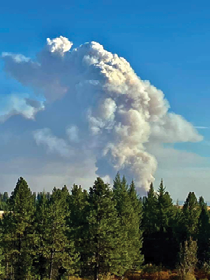
a forest with wildfire smoke rising in the distance

Between 2000-2025, FEMA declared 61 major disasters for Tribal Nations.

As of 2025, 223 Tribal governments had a FEMA-approved hazard mitigation plan.

Good preparations today can decrease fear, reduce losses and speed recovery in a time of disaster or emergency.

Is your Tribe ready?

Prepare for emergencies in Tribal Nations.

a colorful divider bar

Resources

computer cursor pointing right Emergency Preparedness Handbook for Tribes
A resource to help Tribes develop and implement an emergency preparedness plan for responding to natural and man-made disasters if and when they occur.
computer cursor pointing right  Tribal Adaptation Resources
From the University of Oregon, this guide hosts Tribal funding opportunities, resources, and examples of Tribal adaptation plans.
computer cursor pointing right  EPA’s Tribal Resilience Webinar
Introduces the Tribal Climate Adaptation Guidebook and highlights the experiences of two practitioners advancing climate adaptation and resilience within their Tribes.
computer cursor pointing right  EPA’s Air Quality Flag Program
This program raises public awareness about outdoor air quality. AQFP partners ‘raise a flag’ (a color matching EPA’s Air Quality Index) to inform their communities about current air quality. The program includes readily available outreach, activities, and lesson plans.
 computer cursor pointing right  ITEP Tribes Wellbeing for Seven Generations Program
From the Institute for Tribal Environmental Professionals, this program has videos, webinars, and information about ongoing projects related to environmental change.
computer cursor pointing rightFEMA Tribal Affairs
FEMA’s Tribal website that includes more information and links to FEMA Tribal consultation information and policies, disaster declarations and guidance and mitigation information.
computer cursor pointing right  EPA’s Emergencies and IAQ
Learn how to prepare indoor environments for emergencies and disasters to protect healthy IAQ. This page includes information on power outages and portable generators, flood cleanup, preparing for winter weather and extreme heat, and how to create a clean room indoors during wildfires.
computer cursor pointing right Barriers to Tribal Mitigation Planning
An article about the impact of natural disasters and vulnerabilities unique to Tribes.

computer cursor pointing right  FEMA's Are You Ready? Guide
A guide for a general audience with information about how to prepare and plan for different disasters. There is also general information about recovery.

 Did you know...
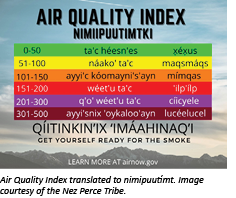
the AirNow Flag Program poster
Air Quality Index translated to nimipuutímt. Image courtesy of the Nez Perce Tribe.

EPA’s AirNow website and the AirNow Mobile App provide an easy way to check for current and forecast air quality information in your area? Check it out to plan your daily activities and protect your health.


arrow pointing to the left Previous: Home Heating, Cooking and Energy
Next:  Disaster Response & Recoverycomputer cursor pointing to the right

Indoor Air Quality (IAQ)

  • Learn about Indoor Air Quality
  • IAQ by Building Type
  • Indoor Air Pollutants and Sources
  • IAQ Science and Technologies
  • Networking and Funding
  • Webinars, Meetings and Resources
  • IAQ Trending Topics
  • IAQ Frequently Asked Questions
  • Publications about IAQ
  • Regional and State IAQ Information
  • Tribal Indoor Air Quality Resource Directory
    • Healthy Homes, Schools, and Buildings
    • Asthma
    • Mold and Moisture
    • Radon
    • Commercial Tobacco and Secondhand Smoke
    • Home Heating, Cooking and Energy
    • Disaster Preparedness & Mitigation
    • Disaster Response & Recovery
    • Alaska Resources
    • Funding
    • Helpful IAQ Contacts
Contact Us about Indoor Air Quality
Contact Us about Indoor Air Quality to ask a question, provide feedback, or report a problem.
Last updated on April 30, 2026
  • Assistance
  • Spanish
  • Arabic
  • Chinese (simplified)
  • Chinese (traditional)
  • French
  • Haitian Creole
  • Korean
  • Portuguese
  • Russian
  • Tagalog
  • Vietnamese
United States Environmental Protection Agency

Discover.

  • Accessibility Statement
  • Budget & Performance
  • Contracting
  • EPA www Web Snapshot
  • Grants
  • No FEAR Act Data
  • Plain Writing
  • Privacy and Security Notice

Connect.

  • Data
  • Inspector General
  • Jobs
  • Newsroom
  • Regulations.gov
  • Subscribe
  • USA.gov
  • White House

Ask.

  • Contact EPA
  • EPA Disclaimers
  • Hotlines
  • FOIA Requests
  • Frequent Questions
  • Site Feedback

Follow.