


What is a MERV rating?
Minimum Efficiency Reporting Values, or MERVs, report an air filter's ability to capture particles between 0.3 and 10 microns (µm).
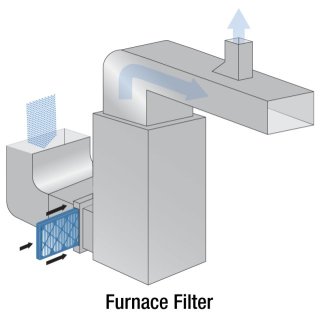
- This value is helpful in comparing the performance of different filters, particularly for furnace or central heating, ventilation, and air conditioning (HVAC) systems.
- The rating is derived from a test method developed by the American Society of Heating, Refrigerating, and Air Conditioning Engineers (ASHRAE).
- The higher the MERV rating, the better the filter is at trapping specific sizes of particles.
- If you decide to upgrade to a higher efficiency filter, choose a filter with at least a MERV 13 rating, or as high a rating as your system fan and filter slot can accommodate. You may need to consult a professional HVAC technician to determine the highest efficiency filter that will work best for your system.
- All filters require periodic replacement to function properly. Follow the manufacturer's recommendations on maintenance and replacement.
- Review EPA’s Guide to Air Cleaners in the Home for more information, including tips on selecting a portable air cleaner, furnace filter, or HVAC filter.
| MERV Rating | Particle Size in Microns (µm) with Average Capture Efficiency |
|---|---|
| 1-4 | 3.0-10.0µm less than 20% |
| 5 | 3.0-10.0µm greater than or equal to 20% |
| 6 | 3.0-10.0µm greater than or equal to 35% |
| 7 | 3.0-10.0µm greater than or equal to 50% |
| 8 | 1.0-3.0µm greater than or equal to 20% 3.0-10.0µm greater than or equal to 70% |
| 9 | 1.0-3.0µm greater than or equal to 35% 3.0-10.0µm greater than or equal to 75% |
| 10 | 1.0-3.0µm greater than or equal to 50% 3.0-10.0µm greater than or equal to 80% |
| 11 | 0.30-1.0µm greater than or equal to 20% 1.0-3.0µm greater than or equal to 65% 3.0-10.0µm greater than or equal to 85% |
| 12 | 0.30-1.0µm greater than or equal to 35% 1.0-3.0µm greater than or equal to 80% 3.0-10.0µm greater than or equal to 90% |
| 13 | 0.30-1.0µm greater than or equal to 50% 1.0-3.0µm greater than or equal to 85% 3.0-10.0µm greater than or equal to 90% |
| 14 | 0.30-1.0µm greater than or equal to 75% 1.0-3.0µm greater than or equal to 90% 3.0-10.0µm greater than or equal to 95% |
| 15 | 0.30-1.0µm greater than or equal to 85% 1.0-3.0µm greater than or equal to 90% 3.0-10.0µm greater than or equal to 95% |
| 16 | 0.30-1.0µm greater than or equal to 95% 1.0-3.0µm greater than or equal to 95% 3.0-10.0µm greater than or equal to 95% |
| HEPA filter* | 0.30µm greater than or equal to 99.97% Particles that are larger or smaller than 0.30µm are captured with a greater than 99.97% efficiency |
*High efficiency particulate air (HEPA) filters are a type of pleated mechanical air filter that is common in portable air cleaners, also known as air purifiers. The particle size and average capture efficiency listed in the table above for HEPA filters are not based on the MERV rating system.